Maximizing Efficiency: Aluminum Profile Conveyor Frames for Line Balancing
Aluminum profile conveyor frames enable 30% faster line reconfiguration, using T-slot modularity to optimize station positioning and reduce bottlenecks.
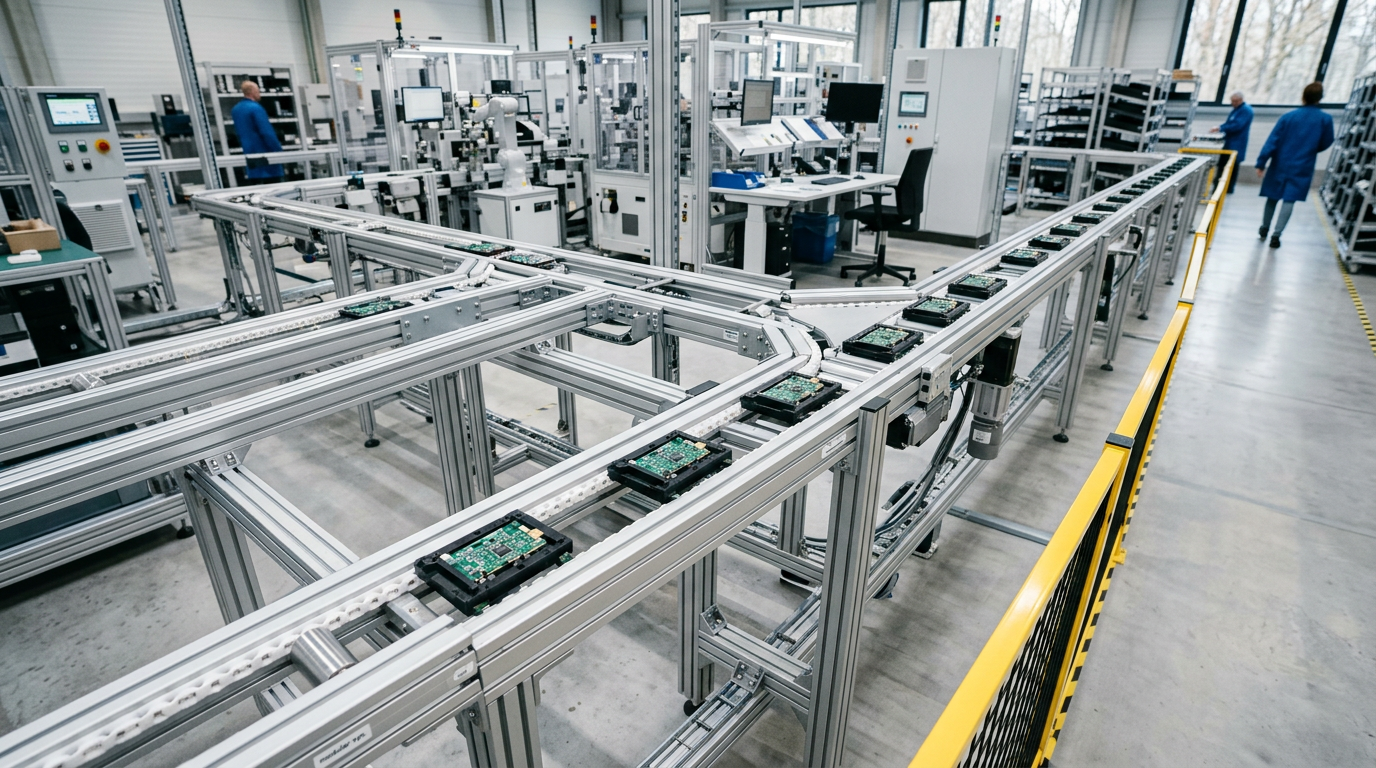
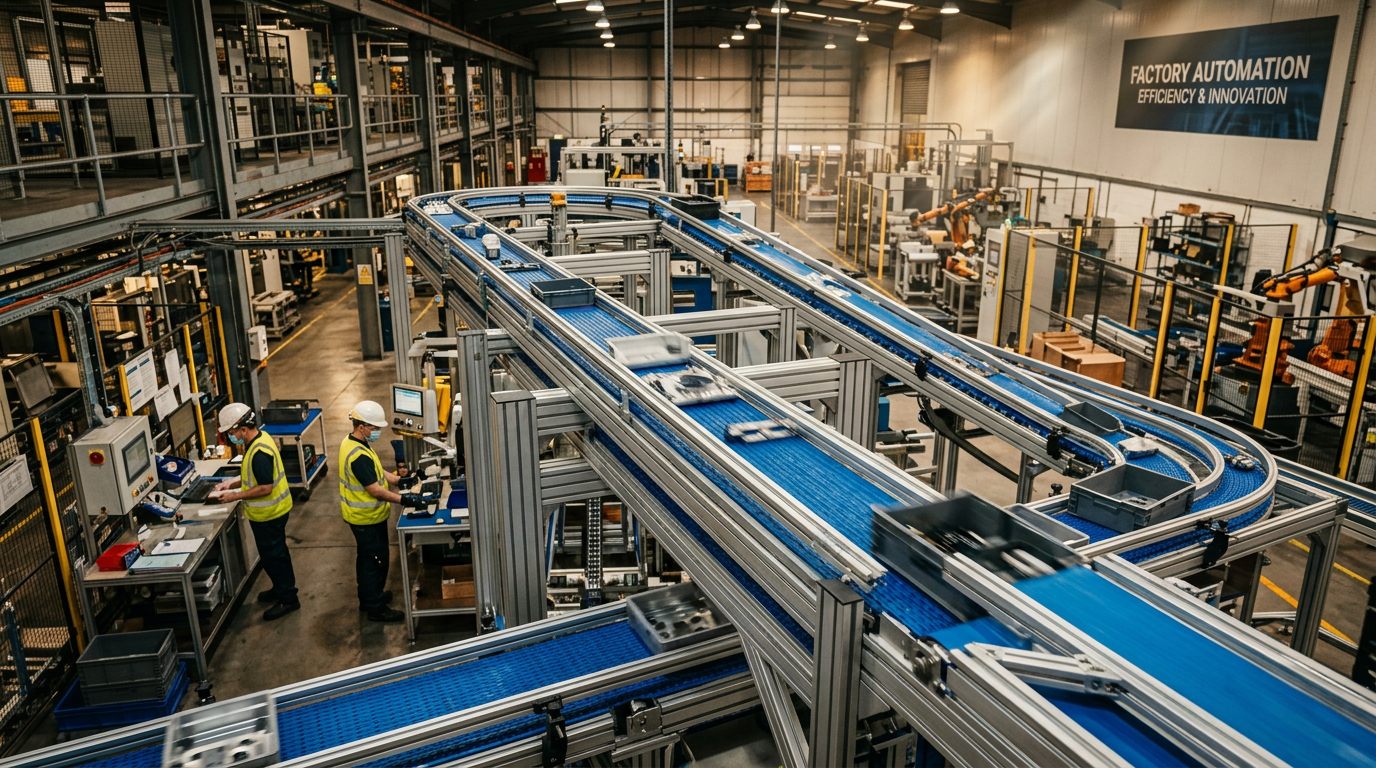
The design of modern production lines requires a fundamental shift from static layouts to dynamic, reconfigurable systems where line balancing is achieved through the modular adjustability of frame components. Aluminum profile conveyor frames provide the structural flexibility necessary to eliminate bottlenecks, allowing for a 30% faster reconfiguration time compared to welded steel alternatives. By utilizing T-slot modularity, engineers can fine-tune station positioning and buffer zones to ensure a synchronized flow of materials.
The Role of Aluminum Profiles in Line Balancing
Line balancing is the process of aligning the cycle times of individual workstations to minimize idle time and maximize throughput. In a rigid manufacturing environment, changing the pitch between conveyors or adding a buffer section often requires significant hot-work (cutting and welding).
Aluminum profile systems, typically constructed from 6063-T6 alloy, utilize a standardized T-slot geometry. This allows for the integration of sensors, diverters, and stoppers at any point along the frame without drilling. In high-speed packaging or electronic assembly, the ability to shift a transition point by 100mm can be the difference between a smooth flow and a product pile-up.
Structural Integrity and Weight Advantages
While often perceived as less robust than steel, structured aluminum profiles offer a high strength-to-weight ratio. For most unit handling applications—from e-commerce shipping parcels to automotive small parts—profiles in the 40x40mm to 80x80mm range provide sufficient moment of inertia to resist deflection. Because the frames are lighter than steel, they impose lower floor loads and allow for the use of simpler, height-adjustable leveling feet, which are crucial for maintaining a perfectly level plane across disparate line segments.
Engineering Advantages for Process Optimization
When optimizing a production line for maximum efficiency, engineers must consider "takt time"—the rate at which a finished product needs to be completed to meet customer demand. Aluminum profile conveyor frames facilitate this through several key features:
- Iterative Placement: Sensors and pneumatic stops can be slid along the T-slot to find the optimal "trigger point" during the commissioning phase.
- Integrated Wire Management: Many profiles feature internal channels or snap-on covers, protecting sensor cables and pneumatic lines that control line-balancing gates.
- Modular Extensions: If a line requires additional buffering due to a slow-cycle machine, an additional 2-meter section of aluminum frame can be bolted on in under an hour.
The use of modular components is essential for companies aiming for "Lean" or "Agile" manufacturing. For example, Easy Conveyors specializes in these modular aluminum systems, providing the structural backbone that allows European manufacturers to pivot their production layouts with minimal downtime.
Comparison: Aluminum vs. Stainless Steel vs. Carbon Steel
Choosing the right frame material depends on the environment (hygienic vs. industrial) and the frequency of layout changes.
| Feature | Aluminum Profile (Modular) | Welded Carbon Steel | Stainless Steel (Hygienic) |
|---|---|---|---|
| Material Grade | 6063-T6 Anodized | A36 Powder Coated | 304 / 316 Grade |
| Reconfigurability | High (Bolted) | Low (Cut/Weld) | Low (Sanitary Welds) |
| Corrosion Resistance | Excellent (Oxide Layer) | Moderate (Needs Paint) | Exceptional |
| Assembly Speed | Fast (Standard Tools) | Slow (Welding/Grinding) | Slow (TIG Welding) |
| Cost Tier | Mid-Range | Lowest Initial Cost | Highest |
| Vibration Damping | High (Joint Gaskets) | Moderate | Moderate |
Easy Conveyors stocks the conveyor components discussed here — ready to ship across Europe.
Integration with Automation Components
Line balancing is rarely just about the frame; it involves the synergy between the frame and the drive systems. When using aluminum profiles, it is common to integrate VFD soft-start tuning to prevent product "shingling" during stops and starts.
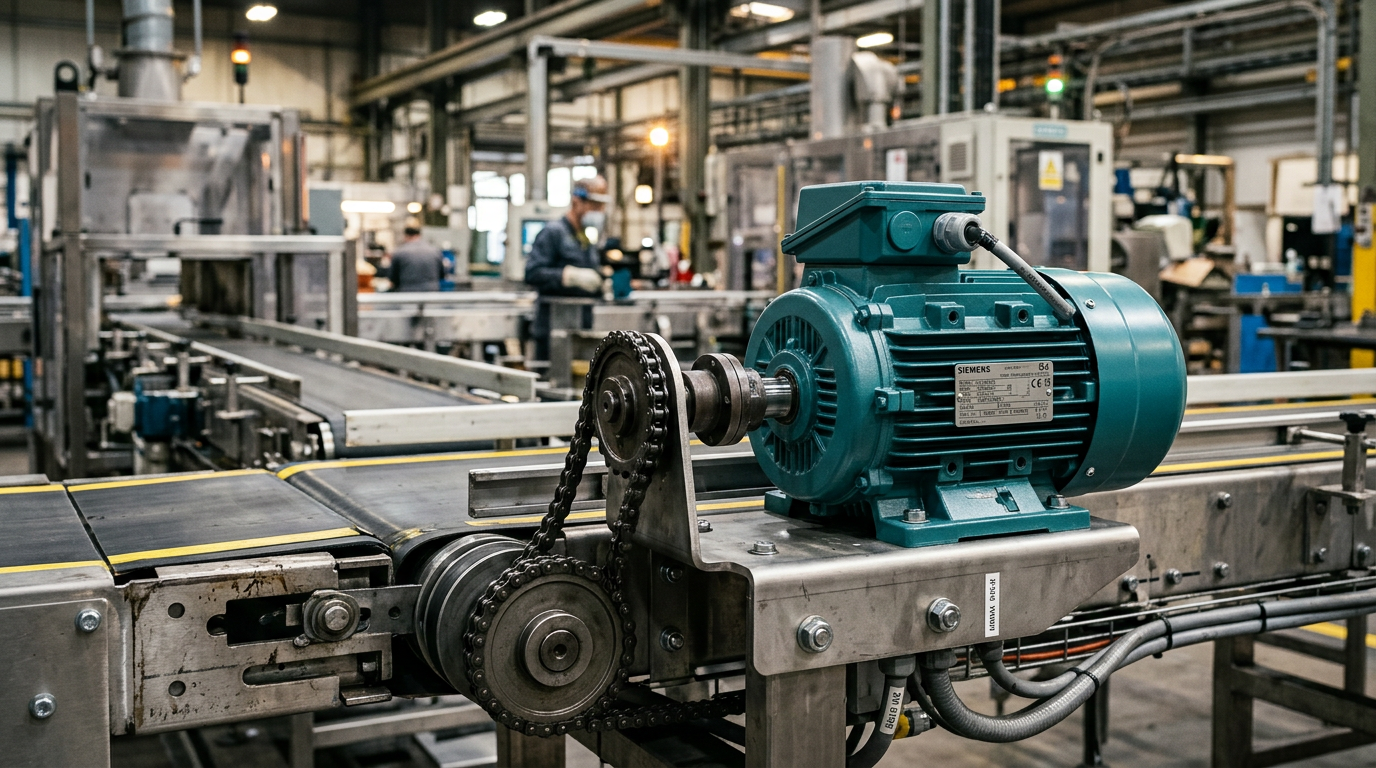
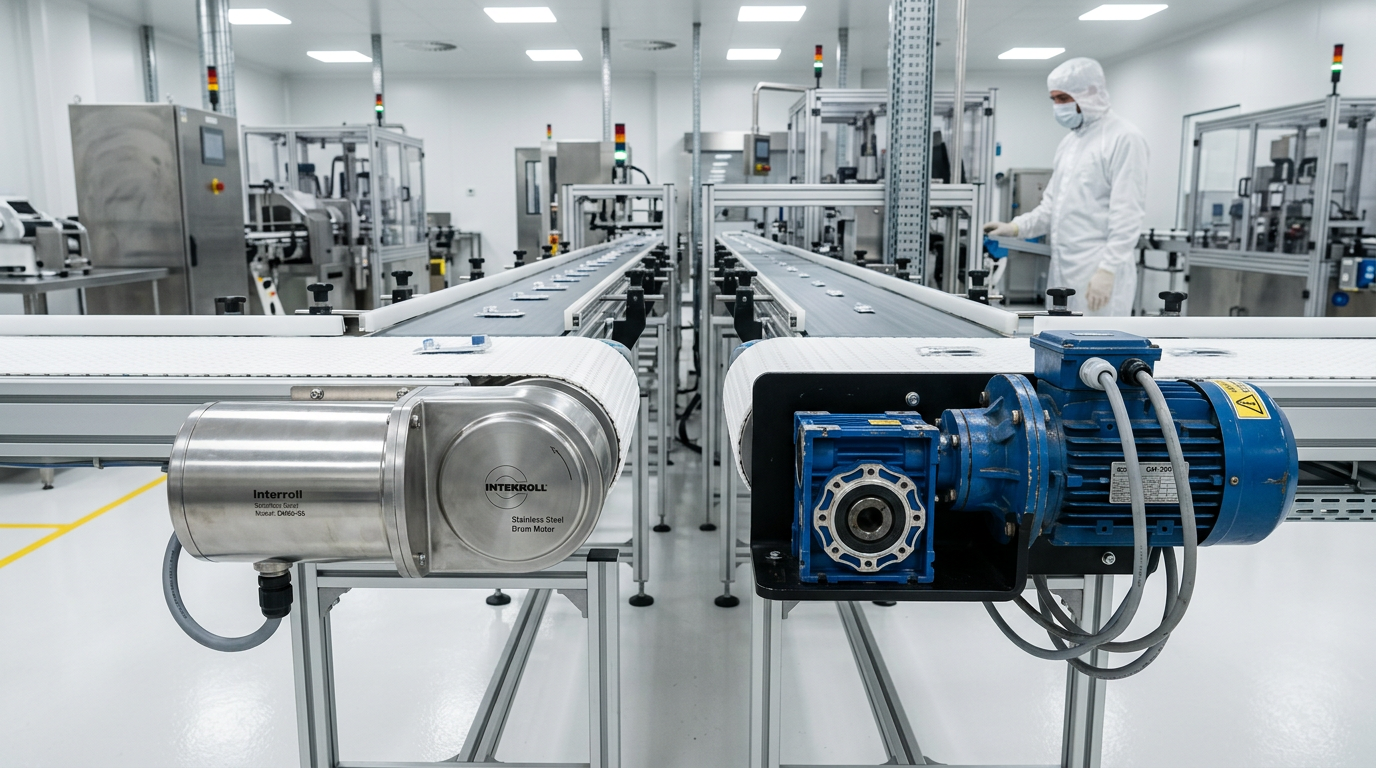
Furthermore, the frame must support the weight and torque of the drive. While a drum motor selection might be preferred for space-concious designs to keep the profile clean, traditional gearmotors are easily mounted to aluminum frames using standard adapter plates. In precision indexing applications, the rigidity of the T-slot connection is vital to ensure that motor vibration does not loosen the mounting over time.
Addressing Vibration and Fastener Security
One common failure mode in modular aluminum systems is the loosening of fasteners due to harmonic vibration. To counteract this in high-speed sortation environments:
- Use self-locking "drop-in" T-nuts.
- Apply medium-strength thread locker to critical structural bolts.
- Utilize gusset plates at 90-degree junctions to distribute stress.
Designing for Future-Proofing
A "future-proof" conveyor line is one that can adapt to changing product dimensions. If a packaging line moves from a 200mm wide box to a 400mm wide box, an aluminum profile system allows for the lateral adjustment of guide rails. By loosening a few M8 bolts, the guide rail supports can be moved outward, a task that would require grinding and re-welding on a fixed steel frame.
For designers focusing on the "Industry 4.0" transition, the T-slots in the aluminum frame serve as a mounting grid for IoT gateways, cameras for visual inspection, and edge computing modules. This makes the conveyor frame not just a structural element, but a "smart spine" for the entire production facility.
Maintenance and Longevity
Aluminum does not rust, which is a significant advantage in facilities with high humidity or those requiring non-washdown moisture resistance. Maintenance teams benefit from the "clean" nature of the material—no paint to chip or flake into the product stream. When combined with high-quality hygienic wash-down design principles (even in non-food environments), the lifecycle cost of aluminum frames often drops below that of carbon steel due to reduced refinishing and modification labor.
By viewing the conveyor frame as a modular tool rather than a static piece of floor equipment, operations managers can significantly improve their line balancing outcomes and reduce the total cost of ownership across the equipment's lifespan.
Frequently Asked Questions
Is aluminum strong enough for heavy-duty industrial conveyors?
While steel has a higher modulus of elasticity, engineered aluminum profiles use specific cross-sectional geometries (like 80x80mm) to provide comparable rigidity for loads up to 500kg per meter.
What fasteners are best for aluminum profiles?
Most modular systems utilize M6 or M8 stainless steel fasteners with T-nuts. Using 'anti-vibration' serrated nuts or thread-locking fluid is recommended for high-speed lines.
Can aluminum profiles be used in food-grade environments?
Yes, though it requires specific 'open-slot' or 'high-hygiene' profiles that eliminate crevices where bacteria can grow. For direct food contact, 304/316 stainless is still the global standard.
How does the cost of aluminum compare to carbon steel?
Anodized aluminum profiles generally cost 15-25% more than raw carbon steel but pay for themselves through reduced assembly labor and zero painting requirements.