Optimizing Line Balancing with Aluminium Profile Conveyor Frames
Discover how modular aluminium profile conveyor frames enable precise line balancing and takt time optimization in automated manufacturing environments.
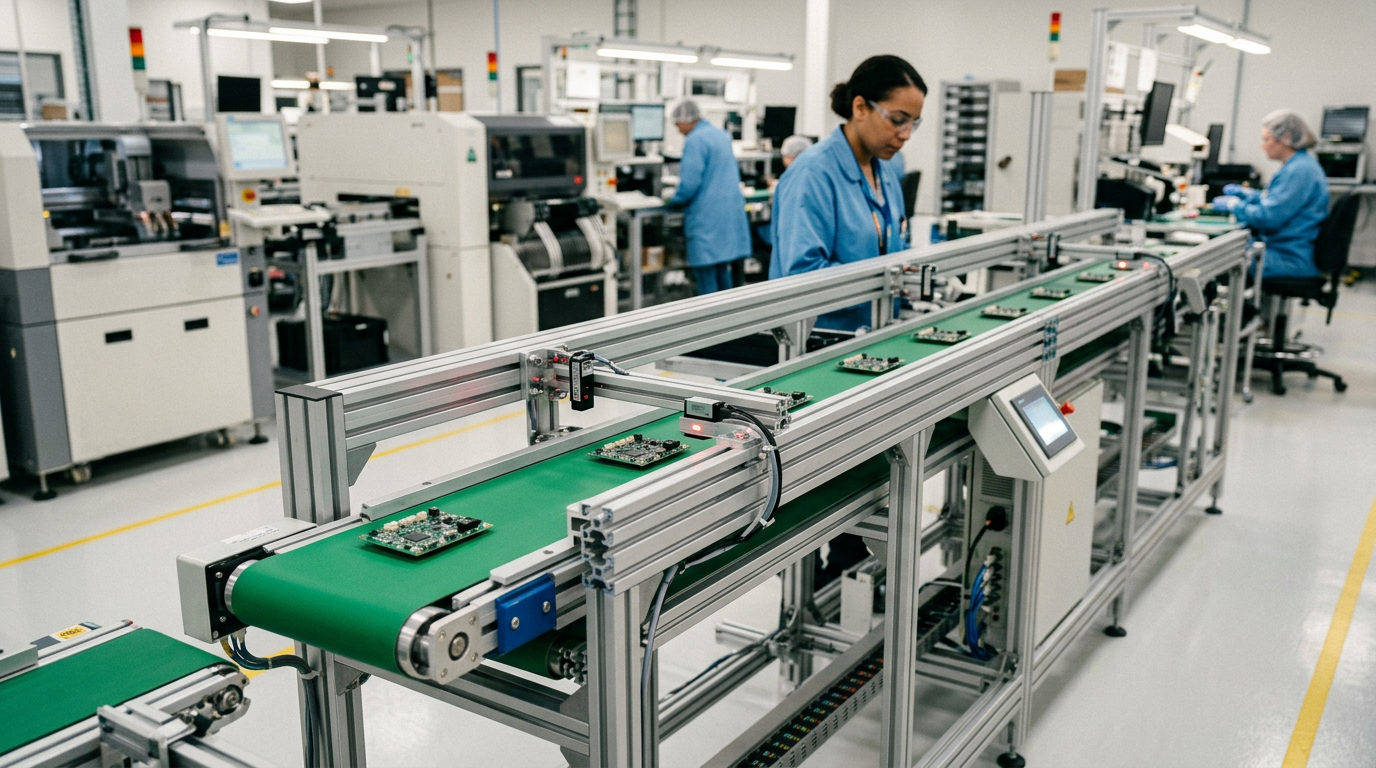
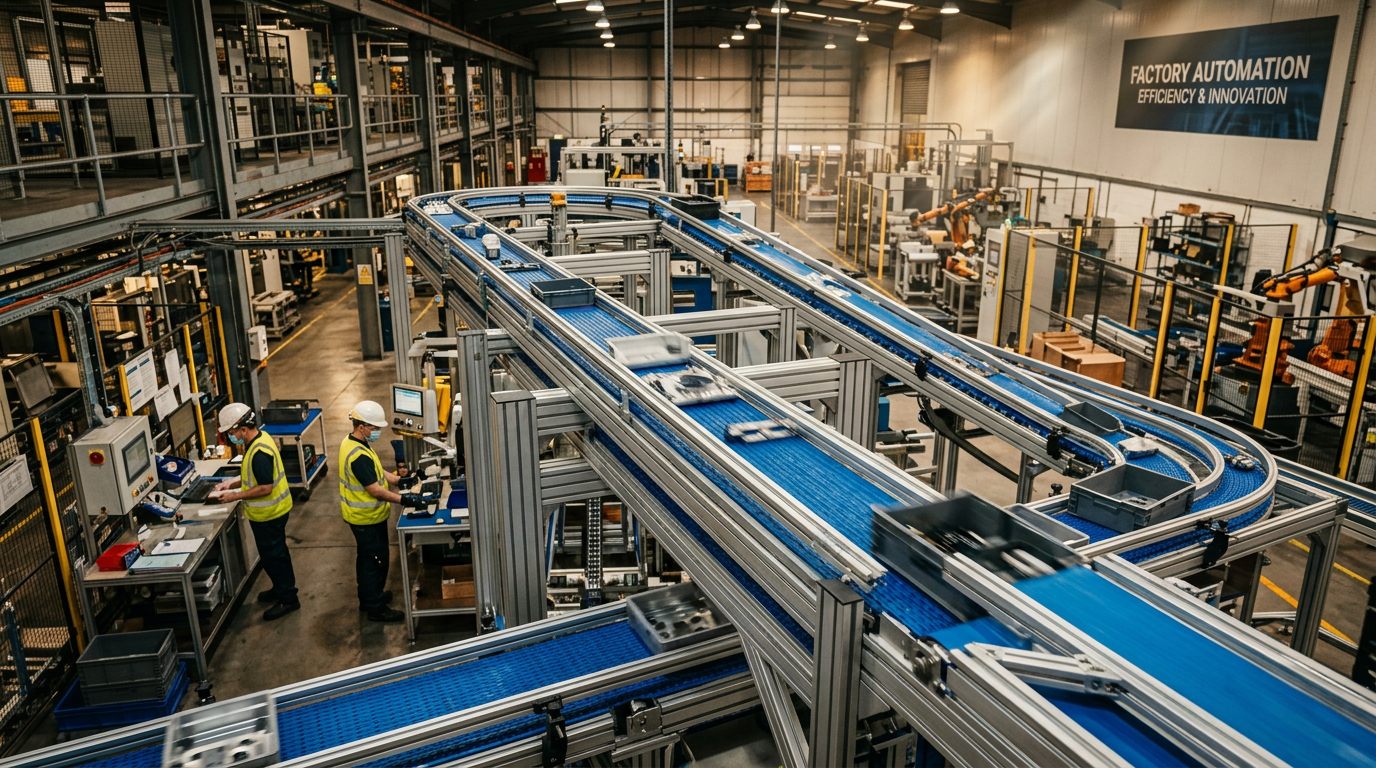
Aluminium profile conveyor frames are the architectural backbone of modern lean manufacturing, providing the necessary modularity to achieve line balancing—the process of equalizing workload across all workstations to minimize idle time and bottlenecks. By utilizing T-slot aluminium extrusions (typically 6063-T6 alloy), engineers can adjust conveyor lengths and heights with a ±0.5mm precision, allowing for the rapid reconfiguration of buffer zones and accumulation sections that are critical for synchronizing disparate cycle times.
The Role of Modular Frames in Line Balancing
Line balancing is fundamentally a game of seconds. In an automated assembly line, the slowest process (the bottleneck) dictates the maximum output of the entire system. Aluminium profile conveyor frames solve this by offering "mechanical agility." Unlike welded steel frames, which are permanent and costly to modify, aluminium profiles allow for the integration of sensors, pneumatic stops, and diverters anywhere along the T-slot rail.
When an engineer identifies a bottleneck, they can quickly extend a conveyor section to increase buffer capacity. According to VDMA standards for modular mechanical engineering, the use of standardized profile systems reduces assembly time by up to 40% compared to traditional steel structures. This speed is vital when rebalancing a line to accommodate a new product mix or a change in takt time.
T-Slot Extrusions: The Engineering Specifications
The structural integrity of these frames relies on the geometry of the extrusion. Most industrial conveyor systems utilize 40mm, 45mm, or 60mm square profiles. The choice of profile depends on the load-bearing requirements and the span between supports.
- Material: 6063-T6 Aluminium (high corrosion resistance and excellent strength-to-weight ratio).
- T-Slot Compatibility: Most systems follow a 8mm or 10mm slot width, allowing for M8 or M10 fasteners.
- Deflection Limits: For precision line balancing, frame deflection should not exceed 1/500th of the span length under maximum load.
Comparison: Aluminium Profiles vs. Welded Steel Frames
For operations managers deciding between frame materials, the trade-offs involve initial cost, flexibility, and long-term maintenance.
| Feature | Aluminium Profile Frames | Welded Steel Frames |
|---|---|---|
| Modularity | High (Bolt-together) | Low (Permanent) |
| Weight | ~33% of Steel | 100% (Heavy) |
| Corrosion Resistance | Natural Oxide Layer | Requires Paint/Galvanization |
| Assembly Time | Short (Manual Tools) | Long (Welding/Grinding) |
| Lead Time | 1-2 Weeks | 4-6 Weeks |
| Vibration Damping | Moderate | High |
Easy Conveyors stocks the conveyor components discussed here — ready to ship across Europe.
Technical Implementation for Line Balancing
To effectively balance a line, the conveyor must do more than move parts; it must manage the flow. Aluminium profiles facilitate this through three primary mechanical strategies:
1. Adjustable Accumulation Zones
By sliding support brackets along the T-slot, engineers can expand or contract accumulation zones. This is critical when a downstream machine has a longer cycle time than an upstream one. The flexibility of Easy Conveyors modules allows for these adjustments to be made without cutting or welding, ensuring that the conveyor length perfectly matches the required buffer size calculated from the takt time.
2. Sensor and Actuator Integration
Line balancing requires real-time data. Inductive sensors and photoeyes must be positioned precisely to trigger "slug-building" or "gapping" sequences. Aluminium frames allow these components to be mounted on universal brackets that slide into the T-slot, ensuring that the sensor is always at the optimal distance from the workpiece.
3. Modular Diverts and Merges
When balancing multiple sub-assembly lines into a single main line, the merge point is a frequent failure node. Aluminium profiles allow for the mounting of 24V DC transfer units or pneumatic pushers that can be repositioned as the product geometry changes. This ensures that the "flow" remains laminar and free of turbulence that could lead to jams.
Sizing and Load Calculations
When designing an aluminium frame for line balancing, engineers must account for both static and dynamic loads. The static load is the weight of the conveyor components and the product. The dynamic load includes the forces exerted during motor startup and emergency stops.
According to ISO 19901-3, structural design must account for the modulus of elasticity. For aluminium, this is approximately 69 GPa, whereas steel is 200 GPa. This means that for the same load and span, an aluminium profile will deflect more than a steel beam of the same dimensions. To compensate, engineers often use "heavy-duty" profile variants with thicker internal webs or shorten the distance between leg supports to 1.5 meters or less.
Failure Modes to Avoid
- Fastener Loosening: In high-vibration environments (e.g., near vibratory bowl feeders), T-nuts can loosen. Always use serrated nuts or thread-locking compound.
- Over-Span Deflection: If the frame sags, the conveyor belt will track poorly, leading to premature wear on the belt edges and pulleys.
- Improper Grounding: Because aluminium profiles are often anodized, the coating acts as an insulator. To prevent ESD (Electrostatic Discharge) issues in electronics assembly, specific grounding terminal blocks must be used to pierce the anodized layer.
Future-Proofing with Modular Systems
The shift toward Industry 4.0 demands that material handling systems be as programmable as the software that controls them. Aluminium profile conveyor frames provide the "hardware programmability" required for this era. As production volumes fluctuate, the ability to lengthen a conveyor by adding a 1-meter module or to change the height of a workstation to improve ergonomics is a significant competitive advantage.
For engineers, the choice of aluminium profiles isn't just about aesthetics; it is about building a system that can evolve. By adhering to standardized profile dimensions (such as those defined by Rexnord or similar component manufacturers), plants can ensure that spare parts and expansion modules are always compatible, reducing the total cost of ownership (TCO) over the 10-to-15-year lifecycle of a typical conveyor system.
In conclusion, aluminium profile frames are the most effective way to implement line balancing in high-mix, low-volume manufacturing. Their ability to be tuned, tweaked, and transformed allows production managers to maintain optimal takt times even as the products themselves change.
Frequently Asked Questions
How does aluminium profile modularity improve line balancing?
T-slot aluminium allows for the rapid relocation of sensors, diverters, and frame supports, enabling engineers to adjust buffer zones and accumulation capacity without welding or downtime.
What is the weight advantage of aluminium over steel frames?
Aluminium is roughly 1/3 the weight of steel, making it easier to install and relocate, though it requires more frequent supports to match steel's stiffness over long spans.
Is aluminium more expensive than welded steel for conveyor frames?
While the initial material cost of aluminium profiles can be 20-30% higher than raw steel, the total cost is often lower due to the elimination of welding, painting, and expensive labor.
What are the standard dimensions for aluminium conveyor profiles?
The most common sizes are 40mm x 40mm and 45mm x 45mm, though 80mm or 90mm profiles are used for heavy-duty main line frameworks.
How do you prevent fasteners from loosening in high-vibration environments?
Use serrated T-nuts or specialized vibration-proof fasteners, and ensure that the frame is properly grounded using ESD-safe connections to pierce the anodized coating.