Optimizing Production: Aluminium Profile Conveyor Frames for Line Balancing
Discover how aluminium profile conveyor frames enable rapid line balancing and 40% faster reconfiguration for manufacturing agility and reduced TCO.
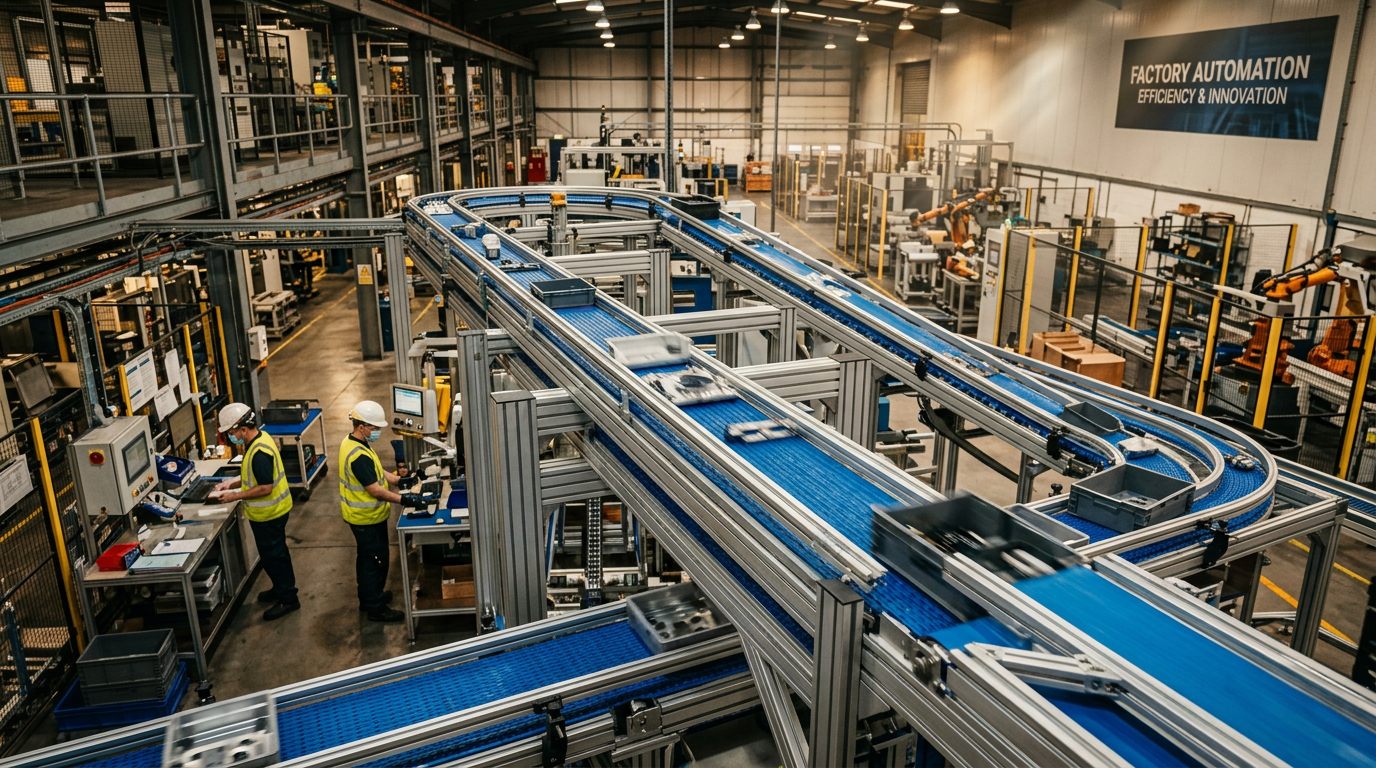
Line balancing in modern manufacturing requires a flexible infrastructure, where aluminium profile conveyor frames provide a 30-40% reduction in reconfiguration time compared to welded steel alternatives due to their T-slot modularity and standardized bolt-on geometry. This modular architecture allows engineers to adjust conveyor lengths, integrate sensors, and reposition drive units without hot work or structural redesign, directly supporting the tactical adjustments needed to eliminate bottlenecks and synchronize cycle times across a production line.
The Role of Modular Frames in Line Balancing
Line balancing is the process of assigning tasks to workstations so that the idle time is minimized and the production flow is continuous. In a dynamic facility, the "perfect balance" achieved on Monday may be obsolete by Friday due to changes in product mix or throughput targets.
Aluminium profile systems, often based on structural standards like those defined by VDMA, serve as the physical backbone of this agility. Unlike traditional mild steel frames that are laser-cut, welded, and powder-coated—making them permanent fixtures—aluminium profiles utilize a "Meccano-style" assembly. This allows for rapid scaling of buffer zones, the addition of side-transfers, or the integration of pneumatic stops at any point along the T-slot groove.
Technical Advantages of Aluminium Profiles
The selection of aluminium over stainless or carbon steel is rarely about raw material cost; it is about "Total Cost of Ownership" (TCO) and "Time to Commission."
- High Strength-to-Weight Ratio: Extruded 6063-T6 aluminium provides high rigidity while remaining lightweight enough for manual repositioning. This is critical for mobile line segments used in seasonal kitting operations.
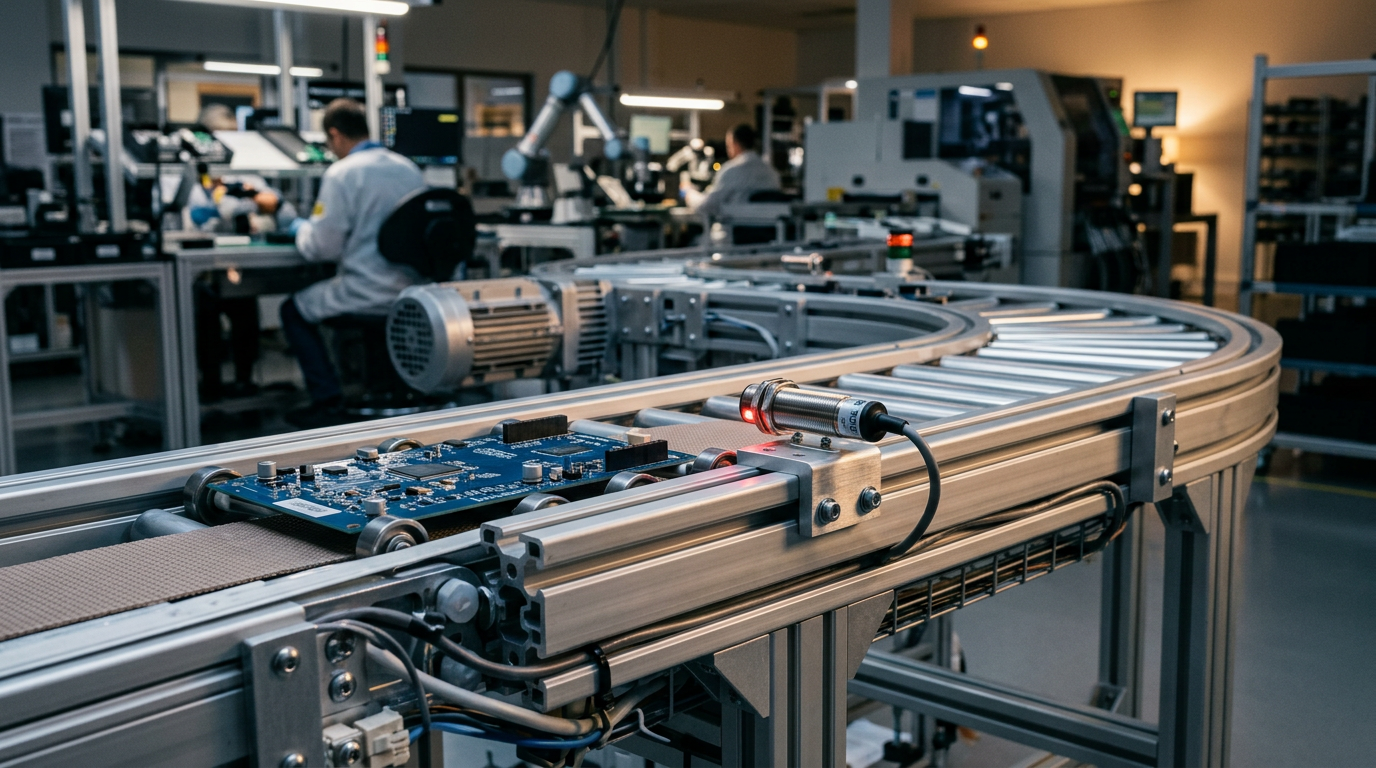
- T-Slot Integration: The longitudinal grooves allow for the mounting of proximity sensors, reflectors, and guide rails without drilling. This facilitates the fine-tuning of "Pitch" and "Lead" times during the commissioning of an automated cell.
- Corrosion Resistance: Naturally forming oxide layers make these frames suitable for most dry-room environments in electronics and automotive assembly without additional painting.
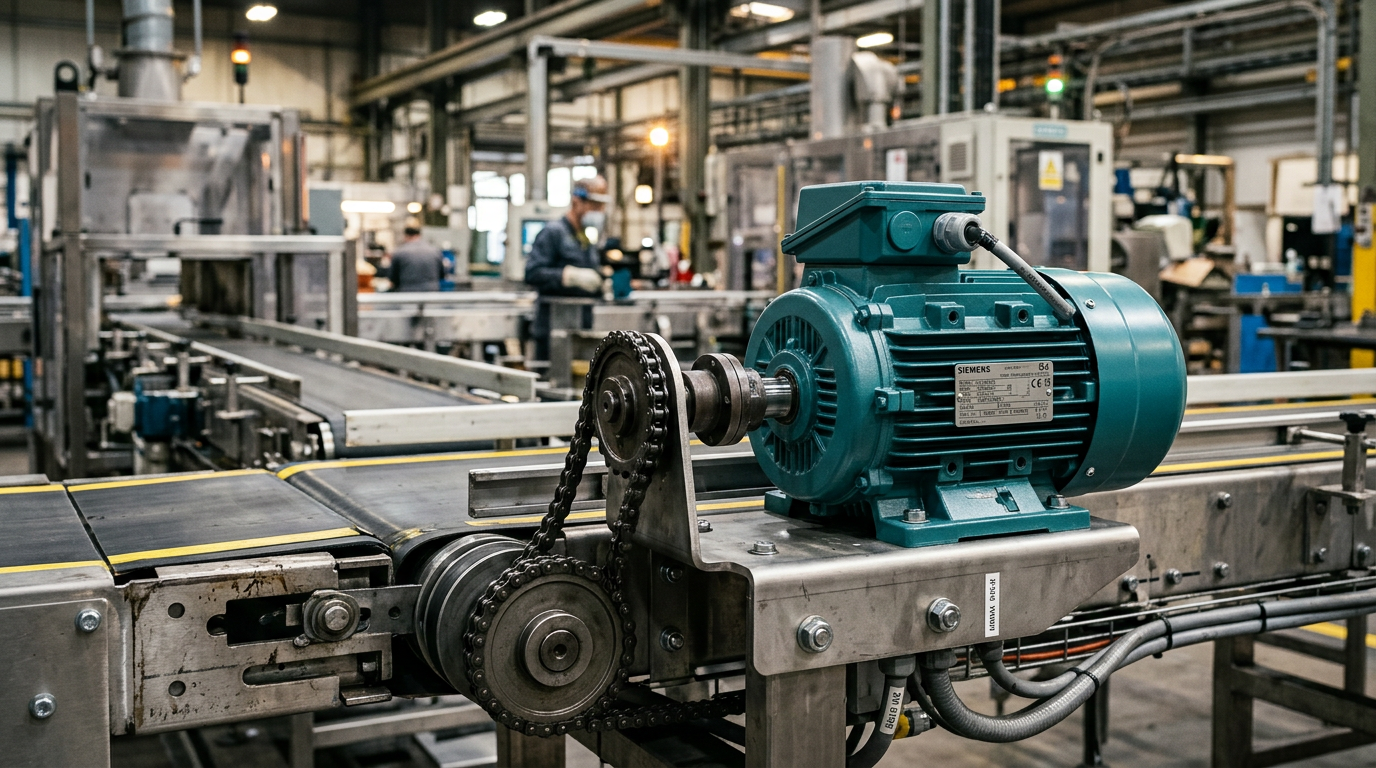
- Compatibility: Most modular aluminium systems are designed to interface seamlessly with standard drive components. For instance, when designing complex layouts, Easy Conveyors leverages these structural benefits to offer systems that are easily expanded as production demands grow.
Comparison: Aluminium Profile vs. Welded Steel Frames
| Feature | Aluminium Profile Frame | Welded Carbon Steel |
|---|---|---|
| Assembly Method | Bolted / T-Slot | Welded |
| Modification Ease | High (No hot work) | Low (Requires grinding/welding) |
| Weight | ~2.7 g/cm³ | ~7.8 g/cm³ |
| Lead Time | 1-2 Weeks (Standard parts) | 4-8 Weeks (Fabrication/Paint) |
| Hygiene Rating | Standard / Cleanroom | High (If Stainless) |
| Vibration Damping | Moderate | High (Due |
Easy Conveyors stocks the conveyor components discussed here — ready to ship across Europe.
to mass) |
Engineering for Line Balance: Buffer and Speed
To achieve line balance, engineers often use the conveyor as a "physical buffer." Aluminium profiles make it simple to extend a conveyor by adding 1-meter segments to increase the "Work in Progress" (WIP) capacity.
According to ISO 12100 safety standards, any modification to a conveyor frame must maintain structural integrity and guard against nip points. Aluminium profile manufacturers provide load-deflection tables that allow engineers to calculate the maximum permissible span between floor supports (typically 2 to 3 meters for standard 40x80mm profiles) to prevent belt tracking issues caused by frame bowing.
Integration with Automation Components
Line balancing is not just about length; it is about control. The T-slots in aluminium frames are the ideal mounting point for:
- VFD Enclosures: To adjust belt speeds and match the Takt time of the slowest workstation.
- Encoders: For precision tracking of parts in a "pitch-catch" scenario between two conveyors.
- Pneumatic Gates: For diverting products to a secondary lane if the primary lane experiences a "back-up" signal.
When integrating these components, it is essential to consider the IE3 or IE4 efficiency classes (IEC 60034-30-1) for the motors used. High-efficiency motors generate less heat, which is beneficial when multiple drive units are clustered together in a dense, balanced line layout.
Modular Design Strategies
When designing a line for maximum balance potential, consider the following strategies:
- Standardize Section Lengths: Use a "grid" approach (e.g., all segments in 500mm increments). This makes the reuse of belts and frames easier across different facility areas.
- In-Frame Cable Management: Many aluminium profiles feature hollow centers or clip-on covers for routing 24V DC control lines and compressed air, keeping the workspace clear for operators.
- Adjustable Support Stands: Utilize telescopic aluminium legs with +/- 50mm of adjustment to account for uneven factory floors, ensuring a level transfer between modules.
Failure Modes and Maintenance
While aluminium is versatile, it is not indestructible. Engineers must monitor for "creep" in bolted connections. High-vibration environments can cause T-nuts to loosen over time. Use of thread-locking fluid or specialized vibration-proof fasteners (serrated nuts) is recommended for lines running 24/7.
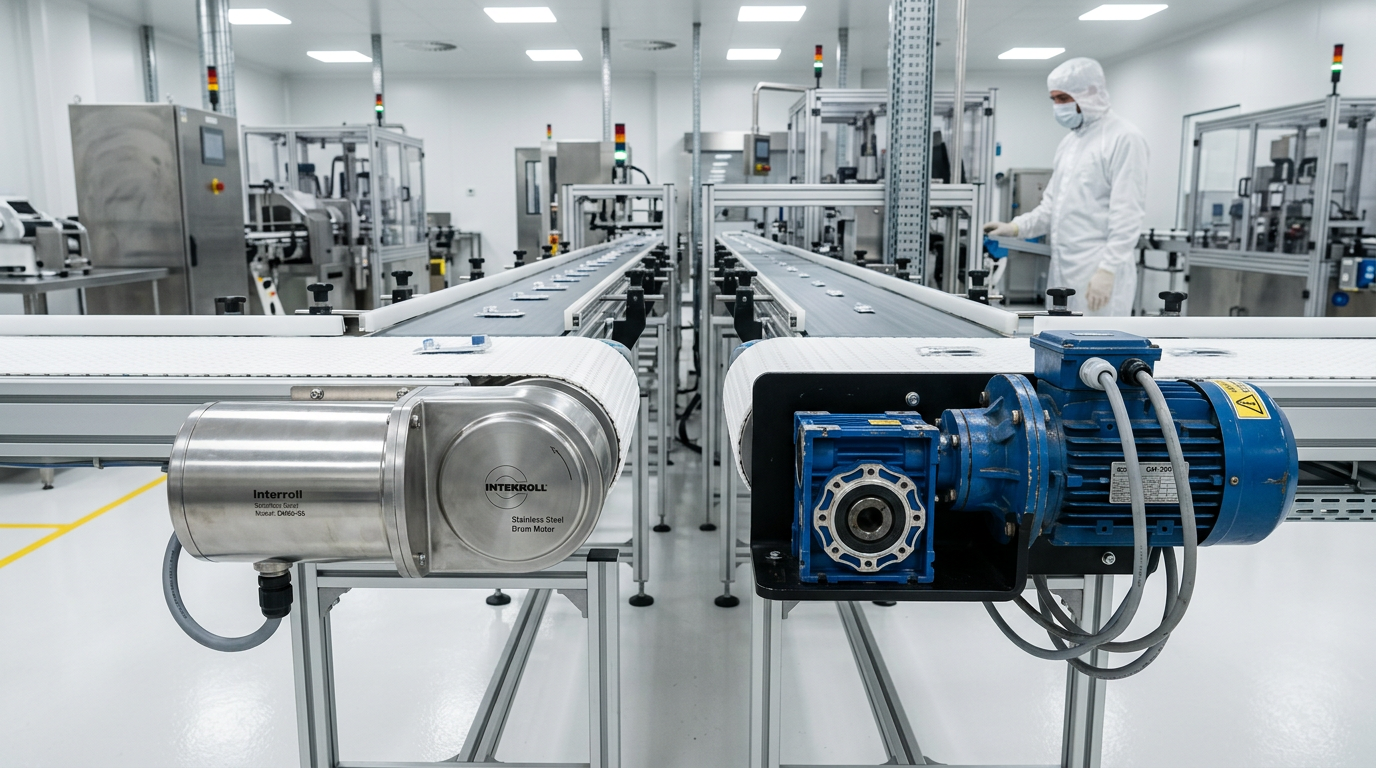
Additionally, avoid using aluminium profiles in heavy wash-down environments where caustic cleaning agents are used, as these can strip the anodized coating. In such cases, stainless steel modular systems remain the industry standard for food and pharma. For dry assembly, however, the flexibility of aluminium is unmatched. By treating the conveyor frame as a modular asset rather than a static piece of furniture, manufacturers can achieve the granular control required for true lean manufacturing.
Frequently Asked Questions
When should I choose aluminium over welded steel frames?
Aluminium frames are easier to modify, lighter, and faster to ship. However, welded steel is better for extremely heavy loads (over 500kg per meter) or high-vibration applications where mass is needed for damping.
Are aluminium frames suitable for food-grade environments?
Standard T-slot aluminium profiles are excellent for dry-room electronics or automotive parts. For high-pressure wash-down in food processing, stainless steel is required as caustic chemicals can degrade aluminium's anodized finish.
What is the maximum span between supports for an aluminium conveyor?
Standard 40x80mm or 45x90mm profiles typically require floor supports every 2 to 3 meters, depending on the weight of the product and the belt tension. Always consult the manufacturer's deflection charts.
Can aluminium profile frames be used in ESD-sensitive areas?
Yes, aluminium is highly conductive. When using ESD-safe T-nuts and grounding straps, aluminium frames are the industry standard for preventing static discharge in electronics assembly.