Optimizing Line Balancing with Aluminium Profile Conveyor Frames
Aluminium profile conveyor frames offer a 30% higher strength-to-weight ratio than steel, enabling rapid line balancing and modular reconfiguration in automation.
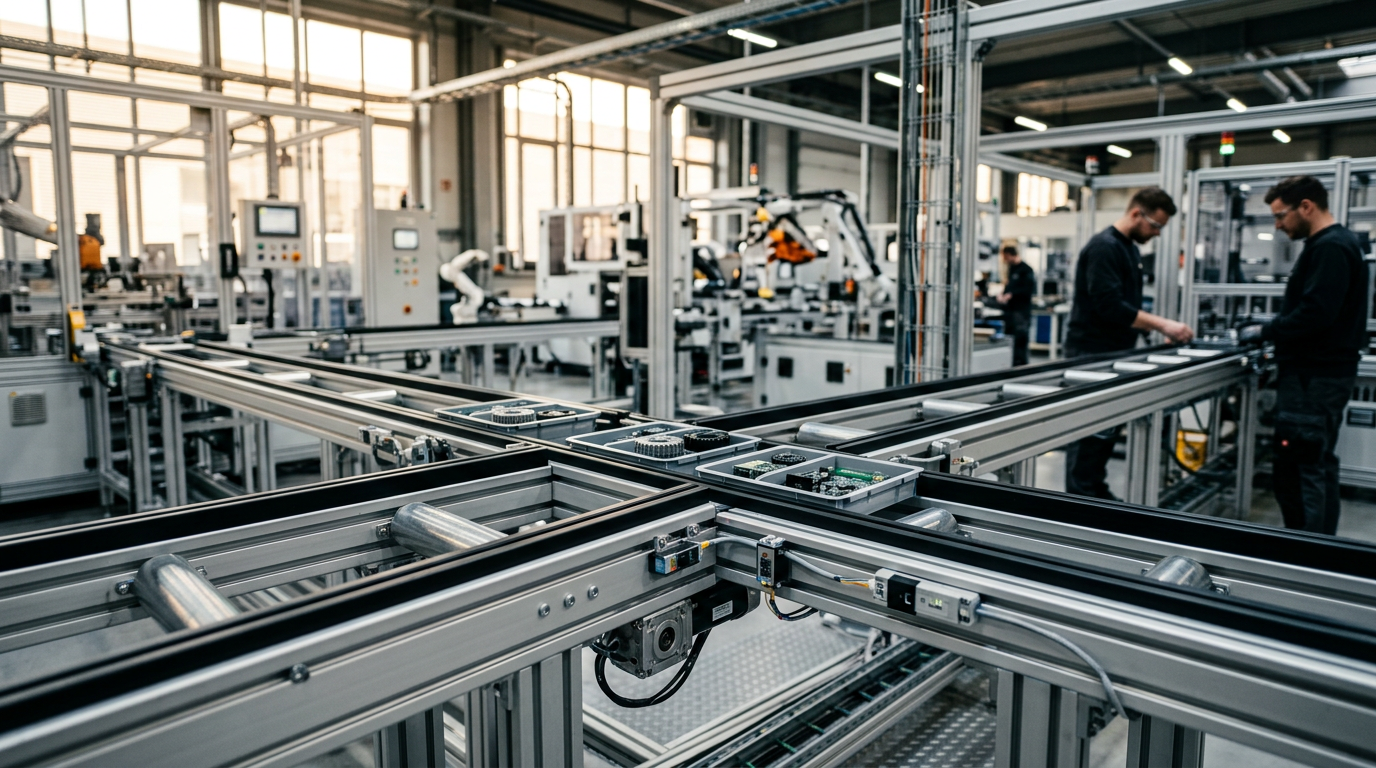
Line balancing in modern high-speed manufacturing requires a frame system that offers a ±10% adjustment range in positioning and layout to accommodate fluctuating cycle times and bottleneck mitigation. Aluminium profile conveyor frames serve as the backbone of these flexible systems, providing a strength-to-weight ratio approximately 30% higher than traditional mild steel welded frames while maintaining a modularity index that allows for onsite reconfigurations without the need for welding or specialized hot-work permits.
The Role of Modular Frames in Line Balancing
In the context of industrial automation, line balancing is the process of aligning the production rate with the Takt time—the rate at which a finished product must be completed to meet customer demand. When bottlenecks occur, engineers must often introduce accumulation zones, change-of-direction modules, or workstations.
Aluminium profile systems, typically constructed from EN AW-6063 T6 alloy (ISO 209), allow for these changes to be made in hours rather than days. Because these profiles feature standardized T-slots, components such as sensors, pneumatic stops, and divergent gates can be clamped anywhere along the frame length. This "infinitely adjustable" nature is critical when fine-tuning the handover points between two conveyor segments to ensure a seamless flow of goods.
Technical Specifications and Mechanical Integrity
While some engineers default to stainless steel for all applications, aluminium profile frames provide significant advantages in non-washdown environments like electronics assembly, automotive parts handling, and tertiary packaging.
| Feature | Aluminium Profile (6063-T6) | Welded Carbon Steel | Stainless Steel (304) |
|---|---|---|---|
| Weight | ~2.7 g/cm³ | ~7.8 g/cm³ | ~8.0 g/cm³ |
| Assembly Method | Bolted / T-Slot | Welded | Welded / Bolted |
| Modification Flex | High (Modular) | Low (Requires Cutting) | Moderate |
| Corrosion Resistance | High (Anodized) | Low (Requires Paint) | Excellent |
| Max Static Load | Up to 1500 N/m | Very High | High |
The mechanical integrity of these frames depends on the profile cross-section. For standard line balancing, 40x40mm or 45x45mm profiles are common, but for heavy-pallet handling, 90x90mm heavy-duty profiles are utilized to manage the torque generated by drum motor selection and high-inertia starts.
Implementing Buffers and Accumulation Loops
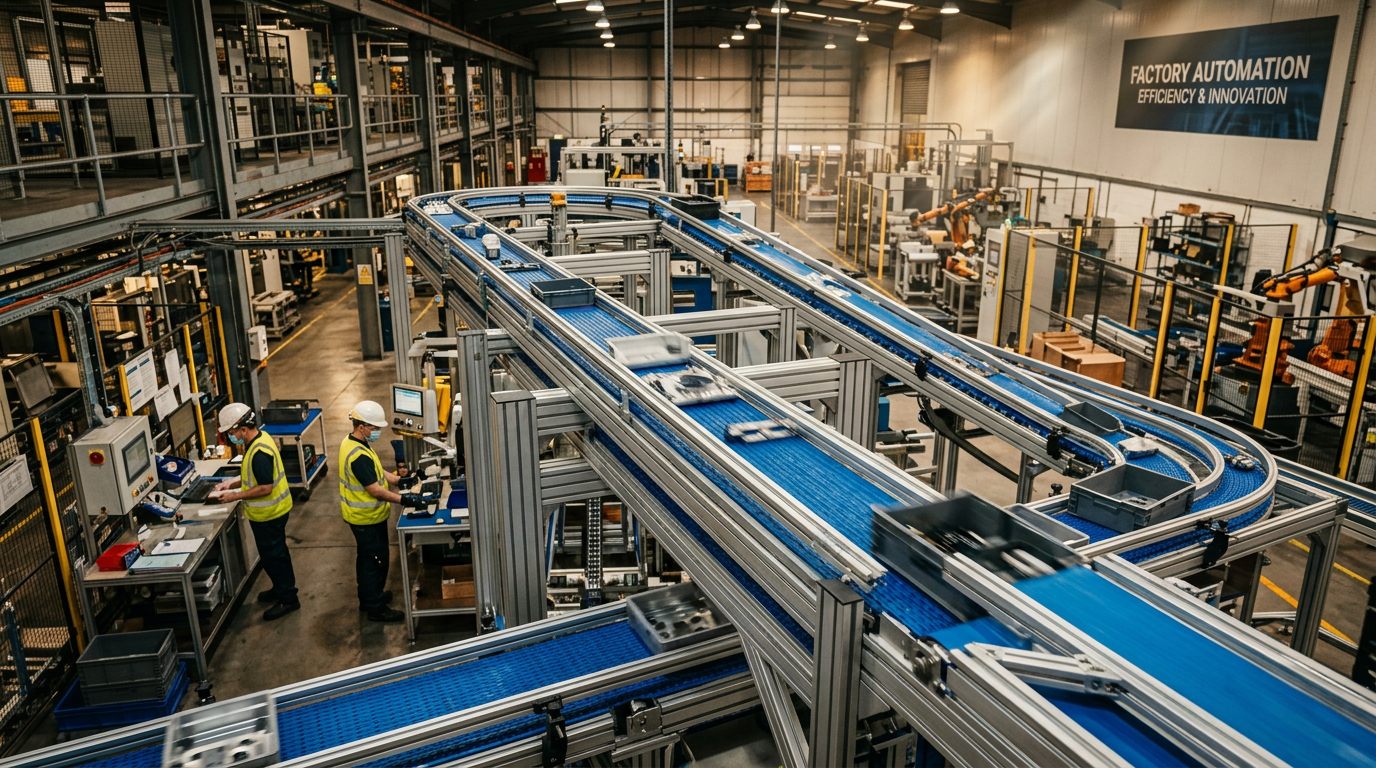
Line balancing often necessitates the creation of "buffer" zones. If Machine A runs faster than Machine B, the conveyor frame must support an accumulation strategy. Aluminium profiles excel here because they can easily support multi-tier "alpine" conveyors or zig-zag patterns within a small foo
Easy Conveyors stocks the conveyor components discussed here — ready to ship across Europe.
tprint.
Using Easy Conveyors modular aluminium systems, engineers can integrate "side-grip" elevators or bypass tracks. These additions are supported by the profile’s structural rigidity, which meets the requirements for vibration damping often found in high-cycle packaging environments.
VFD Integration and Precision Control
The frame is only half the story; line balancing requires precise speed control. By mounting Variable Frequency Drives (VFDs) directly to the T-slots of the aluminium frame, manufacturers can achieve localized control of belt speeds. This is essential for VFD soft-start tuning, which prevents product toppling during the acceleration phases of balanced lines.
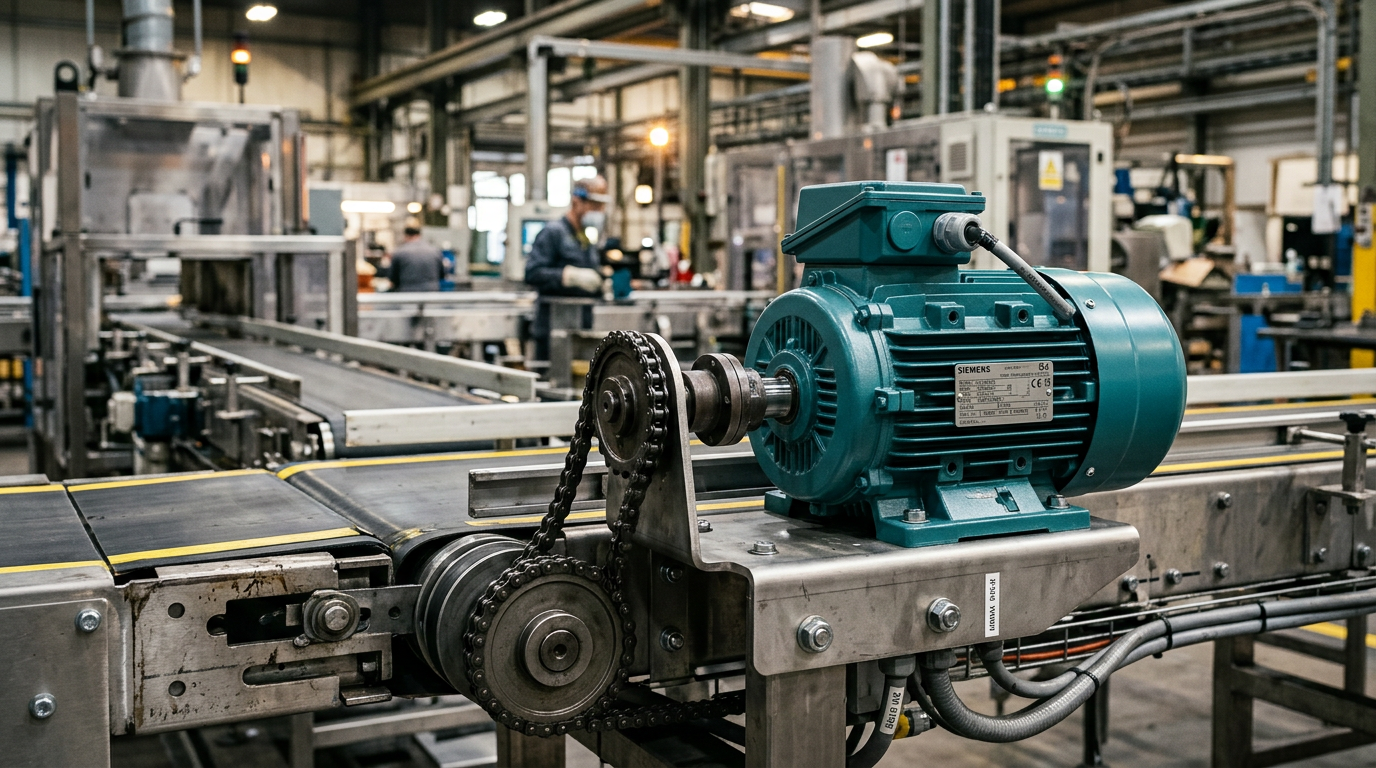
When selecting motors for these frames, many designers opt for IE3 Premium Efficiency motors (IEC 60034-30-1) to minimize the total cost of ownership. The open-frame design of aluminium profiles allows for better heat dissipation from these motors compared to enclosed sheet-metal housings.
Ergonomics and Future-Proofing
Line balancing isn't just about machines; it's about the humans interacting with them. Aluminium profile frames enable easy height adjustment. Using telescopic leg sets, a conveyor can be raised or lowered by ±200mm to meet ergonomic standards (ISO 14738).
As production needs evolve—perhaps due to a move from plastic to paper packaging—the conveyor layout will inevitably need to change. A welded frame is a permanent commitment; a modular aluminium frame is an asset that can be disassembled, moved, and lengthened. This adaptability is the cornerstone of the Circular Economy in manufacturing, as it prevents the scrapping of structural components when a product line is decommissioned.
Design Considerations for High-Load Balancing
When designing aluminium frames for line balancing, several factors must be calculated:
- Deflection Limits: Ensure the profile's moment of inertia is sufficient for the span between supports to prevent belt tracking issues.
- Connector Torque: Ensure that T-bolt and hammer-nut connections are torqued to manufacturer specifications (typically 12-25 Nm for M8 hardware) to maintain frame squareness under dynamic loads.
- ESD Grounding: In electronics manufacturing, the anodized layer of the aluminium acts as an insulator. Use ESD-conductive floor leveling feet and grounding straps to protect sensitive components.
By prioritizing modularity, manufacturers can treat their conveyor lines as a "living" system that evolves alongside their production targets, ensuring that Takt time is always met with maximum efficiency.
Frequently Asked Questions
What is the standard material for aluminium conveyor frames?
Aluminium profiles made from 6063-T6 alloy offer high corrosion resistance and sufficient strength for most packaging and assembly tasks, though they have a lower modulus of elasticity than steel.
How do modular frames help with line balancing?
Line balancing is the process of equalizing the workload across all stages of a production line to achieve a consistent flow and minimize idle time. modular frames facilitate this by allowing quick layout adjustments.
Can aluminium profile conveyors be used in ESD-sensitive areas?
Yes, by using specific ESD-conductive connectors and grounding cables, aluminium profiles can be made safe for sensitive electronic assembly environments.
What are the load-bearing limits for modular aluminium frames?
Standard aluminium profiles can handle static loads up to 1500 N per meter depending on the profile cross-section (e.g., 45x90mm) and support spacing.
How does maintenance for aluminium frames differ from steel?
Maintenance involves checking T-bolt torque every 6 months and inspecting the anodized surface for wear. Unlike steel, they do not require repainting or rust treatment.