Accumulation Conveyors for Buffer Management in Packaging: A Design Guide
Learn how to optimize packaging line OEE using accumulation conveyors. This guide covers ZPA technology, buffer sizing formulas, and material selection for maximum throughput.
To maximize throughput in high-speed packaging lines, accumulation conveyors must provide a buffer capacity typically calculated as 3 to 5 minutes of surge volume to decouple upstream processing from downstream palletizing or labeling. These systems serve as the "lungs" of a production facility, utilizing specialized rollers or modular belts to store products temporarily without stopping the entire line when a downstream machine experiences a minor fault or changeover.
The Role of Accumulation in Packaging Line Efficiency
In modern packaging environments, the goal is rarely to move items as fast as possible, but rather to move them as consistently as possible. This is achieved through buffer management. When a downstream machine—such as a case packer or labeler—stops for a label roll change or a minor jam, the upstream equipment (filling or primary packaging) should ideally continue running.
Accumulation conveyors prevent the "domino effect" of line stoppages. According to industry benchmarks for Overall Equipment Effectiveness (OEE), line efficiency can drop by as much as 15-20% without adequate buffering. By integrating intelligent accumulation, plants can maintain a constant flow, absorbing the micro-stops that are inherent in complex automated systems.
Types of Accumulation Technology
Selecting the right accumulation method depends on the product's fragility, weight, and the required density of the buffer.
1. Zero-Pressure Accumulation (ZPA)
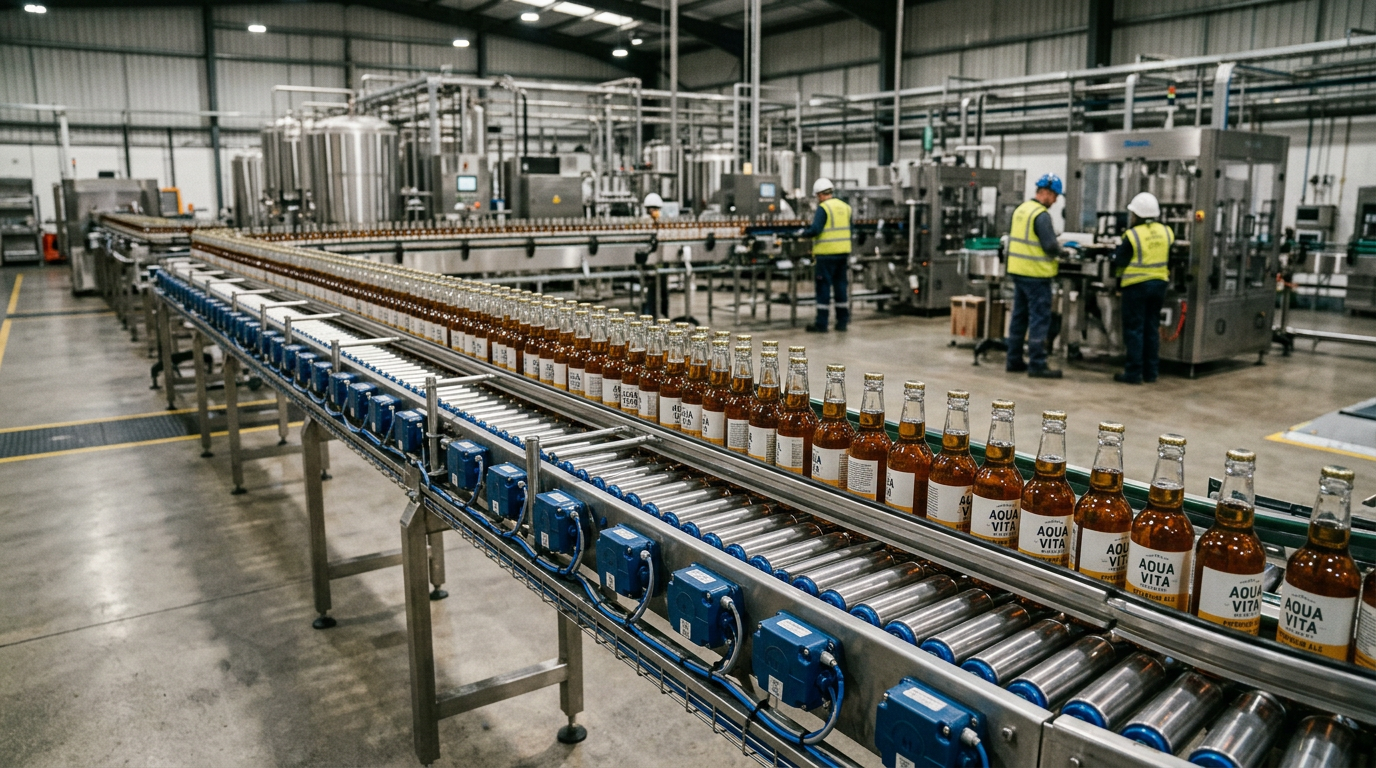
ZPA is the gold standard for fragile or high-value goods. In a ZPA system, products are divided into "zones," each controlled by a sensor and a dedicated drive (often a 24V DC brushless motor). The system ensures that no two products ever touch. This eliminates back-pressure, preventing product damage or "shingling" (where one product slides over another).
2. Minimum-Pressure Accumulation
These systems use a slipping drive medium—such as a padded chain or a specific roller friction setting—to allow products to touch and queue. While simpler and more cost-effective than ZPA, they exert a continuous forward force. This back-pressure can be calculated using the coefficient of friction between the belt and the product, and it must be monitored to ensure it doesn't crush light packaging like cereal boxes or pharmaceutical cartons.
3. Spiral and Vertical Accumulation
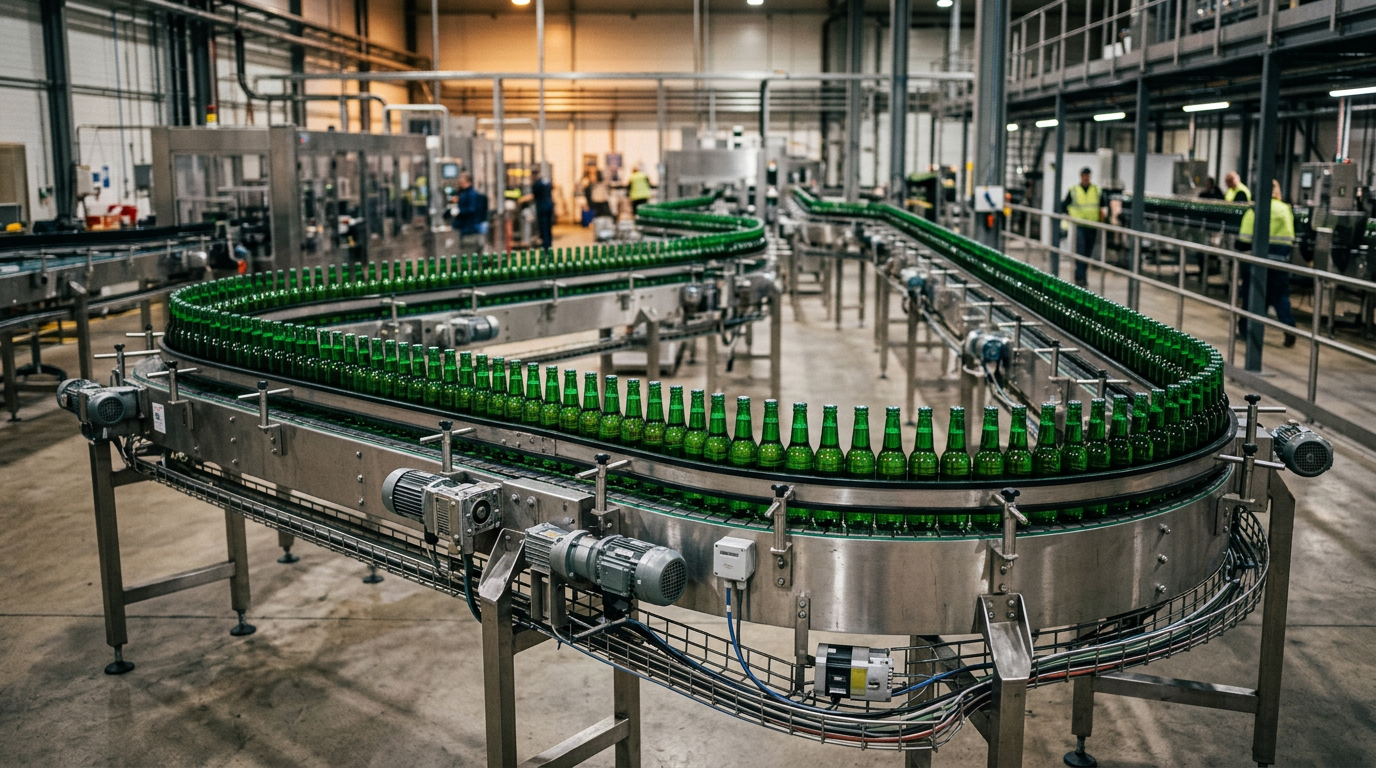
When floor space is at a premium, vertical accumulation allows for significant buffer capacity in a small footprint. These systems use a continuous spiral path or a "first-in, last-out" (FILO) elevator system to hold products aloft until the downstream line is ready.
| Feature | Zero-Pressure (ZPA) | Minimum-Pressure | Spiral/Vertical |
|---|---|---|---|
| Product Contact | None | Continuous | None to Low |
| Energy Efficiency | High (Run-on-demand) | Medium (Constant run) | Medium |
| Complexity | High (Sensors/Logic) | Low (Mechanical) | High (Mechanical) |
| Footprint | High (Horizontal) | High (Horizontal) | Very Low |
| Typical Use Case | Glass bottles, electronics | Corrugated boxes | High-density snacks |
Engineering the Buffer: Sizing and Calculation
To calculate the required length of an accumulation conveyor, engineers must look at the "Mean Time to Recover" (MTTR) of the most frequent downstream stoppages.
Formula for Buffer Length:
L = (V_up * T_stop) / (1 - (V_up / V_down))
Where L is length, V_up is upstream velocity, T_stop is the stoppage duration, and V_down is the downstream take-away speed.
In practice, if an upstream filler produces 120 bottles per minute and a labeler changeover takes 2 minutes, the accumulation system must be able to hold at least 240 bottles. For high-speed lines, European specialists like Easy Conveyors provide modular solutions that allow for rapid scaling of these buffer zones, utilizing standardized parts to adjust the buffer capacity as production demands evolve.
Easy Conveyors stocks the material handling discussed here — ready to ship across Europe.
Control Strategies and Automation Integration
The "intelligence" of a buffer system resides in its control logic. Most modern systems utilize a distributed control architecture. Instead of a single massive PLC managing every motor, the conveyor is split into autonomous zones.
Logix and Sensor Placement
Photoelectric sensors (IEC 60947-5-2) are positioned at the end of each zone. When a sensor detects a product and receives a "busy" signal from the downstream zone, it stops the motor for its own zone. This logic ripples upstream, creating an orderly queue.
Variable Frequency Drives (VFD)
For heavier loads, using VFDs for soft-start tuning is critical. Abrupt starts in an accumulation zone can cause products to topple. By ramping the acceleration over 0.5 to 1.5 seconds, the mechanical stress on the chain and the inertial stress on the product are minimized.
Material Selection for Accumulation
The choice of conveying surface impacts both the friction and the hygiene of the line.
- POM (Acetal): Often used in modular belts for its low coefficient of friction and high strength. It is the standard for dry-running accumulation.
- Antistatic Materials: Essential in electronics packaging or environments with fine powders (flour, chemicals) to prevent spark discharge (ATEX standards).
- Hygienic Design: In food and pharma, accumulation zones must adhere to EHEDG guidelines to prevent "dead zones" where organic matter can collect during buffering.
Common Failure Modes in Buffer Systems
Even the best-designed accumulation systems face operational challenges:
- Sensor Fouling: In packaging, dust from cardboard or leaks from liquid fillers can coat sensor lenses, leading to "false occupancy" signals that stop the line.
- Belt Elongation: Continuous accumulation creates heat through friction (in non-ZPA systems), which can cause modular belts to stretch over time. Regular tensioning is required.
- Logic Deadlocks: If the "clear" signal from the downstream machine is not properly synchronized with the conveyor controller, the buffer may fail to empty even when the downstream line is ready.
Summary of Best Practices
For optimal buffer management, engineers should prioritize modularity. As packaging formats change—for example, moving from rigid plastic to flexible pouches—the friction and stability of the product change. A modular system allows for the easy swapping of roller types or the addition of side guides without replacing the entire conveyor backbone. High-efficiency motors, such as IE3 or IE4 classes (IEC 60034-30-1), should be specified for any zones that require continuous operation to minimize the total cost of ownership (TCO).
Integration with the wider warehouse management system (WMS) or manufacturing execution system (MES) allows for "predictive buffering," where the conveyor begins to clear its queue in anticipation of a planned upstream slowdown, ensuring the line remains balanced at all times.
Frequently Asked Questions
What is the difference between Zero-Pressure Accumulation (ZPA) and standard accumulation?
ZPA systems use sensors and independent motors to ensure products never touch, eliminating back-pressure and damage. Standard accumulation allows products to bump into each other, creating pressure that can crush fragile items.
How much buffer time should I design into my conveyor line?
The industry standard for packaging lines is typically 3 to 5 minutes of buffer capacity. This covers most minor interruptions like label roll changes or printer adjustments without stopping the filler.
Can I implement accumulation in a small footprint?
Yes, vertical or spiral accumulation conveyors allow you to store products vertically, significantly increasing buffer time without requiring additional floor space.
How does heat from friction affect accumulation belts?
Standard accumulation generates heat through friction, which can cause belt expansion. For these applications, use materials like POM with low-friction additives and ensure your conveyor includes a weighted take-up unit.
Are accumulation conveyors energy efficient?
Modern ZPA systems utilize 24V DC roller drives that only run when a product needs to move. This 'run-on-demand' logic can reduce energy consumption by up to 60% compared to continuously running AC motors.