Accumulation Conveyors for Buffer Management in Packaging Lines
Master buffer management with accumulation conveyors. Learn the trade-offs between ZPA, LBP, and MPA technologies to boost packaging line efficiency by up to 30%.
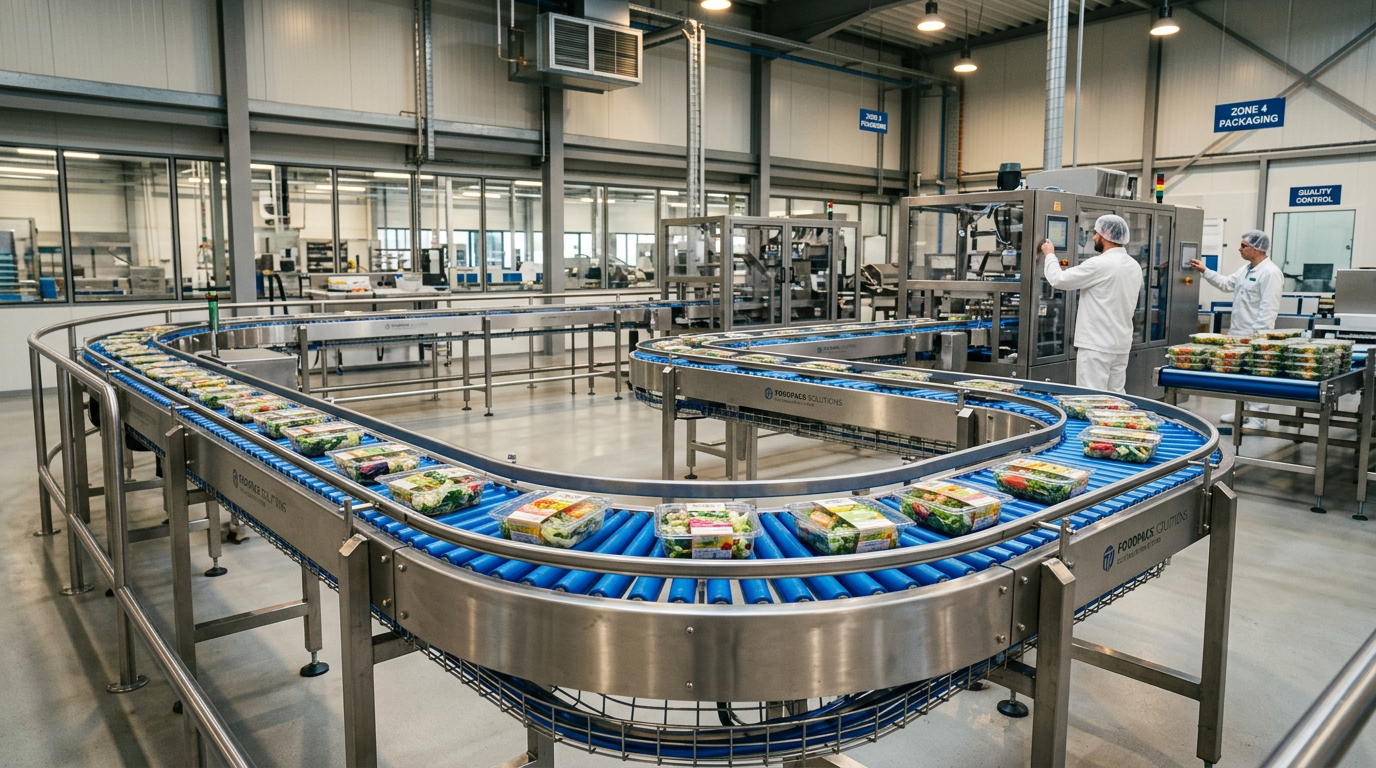
In high-speed packaging lines, accumulation conveyors serve as the critical "shock absorbers" that decouple upstream production from downstream palletizing, maintaining 95% or higher equipment effectiveness by providing 2 to 10 minutes of buffer capacity. Effective buffer management depends on selecting the correct pressure methodology—ranging from low-back-pressure (LBP) to zero-pressure accumulation (ZPA)—to prevent product damage and motor overheating during surges.
The Role of Accumulation in Packaging Lines
Buffer management is the practice of strategically storing products during short-term downstream interruptions. Without a buffer, a minor fault on a labeler or shrink-wrapper would immediately force the entire production line, including the filler or primary packer, to a halt. Given that restarting a filler often involves complex sanitization or priming cycles, these "micro-stops" can account for up to 30% of total lost production time.
Accumulation conveyors solve this by allowing the upstream flow to continue while the downstream machine recovers. The sizing of these systems is typically calculated using the formula:
Buffer Time (min) = (Downstream Recovery Time / Upstream Output Rate) * Safety Factor.
Industry standards, such as those discussed by VDMA, suggest that a 3-to-5-minute buffer is often the "sweet spot" for balancing floor space requirements against line efficiency gains.
Mechanical Principles: Pressure vs. Zero Pressure
When products accumulate on a conveyor, they naturally exert force on one another. Managing this force is the primary technical challenge in buffer design.
1. Minimum Pressure Accumulation (MPA)
Minimum pressure systems use rollers driven by a flat belt or chain that slips beneath the product once it stops. This creates "back pressure." While cost-effective, the constant friction generates heat and can mar delicate packaging.
2. Zero-Pressure Accumulation (ZPA)
ZPA is the gold standard for fragile or high-value goods. The conveyor is divided into "zones," each typically driven by a 24V DC brushless motor (MDR). When a sensor detects a product in Zone B and Zone A is occupied, the motor for Zone B stops entirely. There is zero contact between products. This technology aligns with IEC 60034-30-1 efficiency goals by only consuming energy when a product is actually in motion.
3. Low-Back-Pressure (LBP) Chains
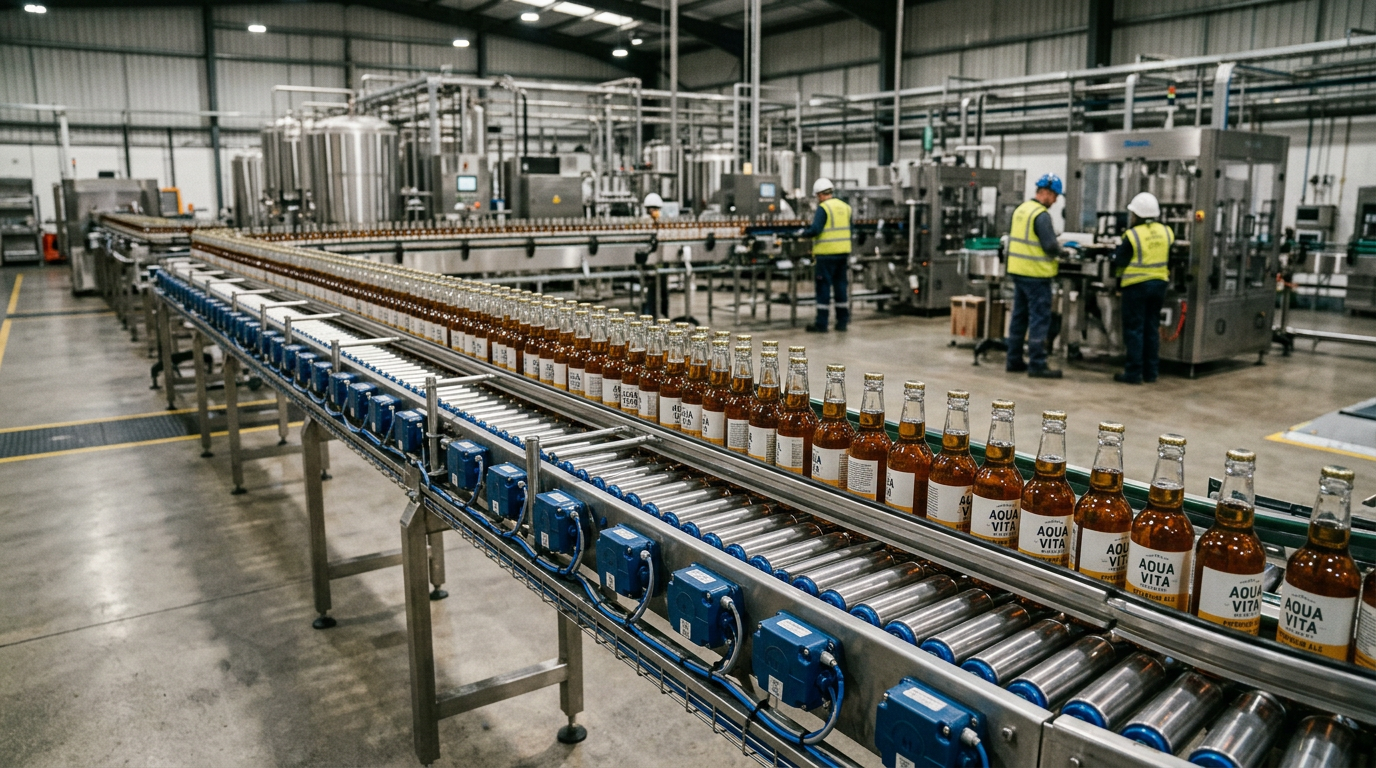
LBP systems utilize modular plastic chains embedded with small rollers. These rollers rotate freely when a product is blocked, significantly reducing the coefficient of friction (often below 0.05). European specialist Easy Conveyors offers modular roller-top solutions that allow for dense accumulation without the mechanical complexity of full ZPA electronic controls.
Comparison Table: Accumulation Technologies
| Feature | Minimum Pressure (MPA) | Low-Back-Pressure (LBP) | Zero-Pressure (ZPA) |
|---|---|---|---|
| Product Contact | High Pressure | Low Pressure | No Contact |
| Energy Consumption | Constant | Constant | Demand-based |
| Maintenance | High (Belt wear) | Low | Moderate (Sensors) |
| Typical Speed | < 30 m/min | < 60 m/min | < 120 m/min |
| Cost Tier | € | €€ | €€€ |
| IP Rating Capability | IP54 | IP66 (Washdown) | IP54/IP65 |
Easy Conveyors stocks the material handling discussed here — ready to ship across Europe.
Strategic Buffer Placement and Sizing
Where you place the buffer is as important as the technology used. Engineers typically identify the "Constraint" or "Bottleneck" of the line (often the filler or primary packer).
- Pre-Bottleneck Buffering: Ensures the bottleneck never starves for material.
- Post-Bottleneck Buffering: Ensures the bottleneck never "blocks" because a downstream unit is down.
For high-speed beverage or pharma lines, Bi-Directional Tables (Alpine or FIFO tables) are used. These systems use a "first-in, first-out" logic to ensure that product shelf life is managed correctly, adhering to FDA guidelines for traceable product flow in regulated industries.
Sizing Rules of Thumb
- Length Calculation: Total Buffer Length = (Production Rate per Minute × Desired Buffer Time) × Product Length + Gap.
- Motor Sizing: For accumulation, the "starting torque" is the critical metric. A conveyor fully loaded with accumulated product requires significantly more torque to restart than a running line. Reference SEW-Eurodrive sizing charts for high-inertia start-up factors.
- VFD Soft-Start Tuning: To prevent product toppling during restarts after accumulation, VFDs should be programmed with an S-curve acceleration profile.
Maintenance and Failure Modes in Accumulation Systems
Accumulation systems are subject to unique wear patterns. In MPA systems, the "slip" generates fine dust from the belt or rollers, which can contaminate sensors or packaging.
- Sensor Misalignment: In ZPA systems, the most common failure is a dirty or misaligned photo-eye. Using sensors with "health output" features or IO-Link diagnostics can reduce downtime by signaling when a lens needs cleaning.
- Roller Flat-Spots: If a heavy product sits on a stationary roller for an extended period in a high-temperature environment, the roller can develop a flat spot. Selecting the right material—such as Intralox high-performance polymers—is essential for longevity.
- Chain Elongation: In LBP modular chains, the friction of accumulation adds tension. Regular monitoring of the catenary sag is required to prevent "jumping" on the drive sprockets.
Advanced Control Strategies: Dynamic Buffering
Industry 4.0 has introduced "Dynamic Buffering," where the speed of the accumulation zones changes based on the real-time status of downstream machines. Instead of a simple "Stop/Go" logic, the system uses a variable speed gradient. If the palletizer slows down by 10%, the accumulation zones incrementally slow down to close the gaps between products without stopping the flow entirely. This reduces the mechanical stress on the system and improves energy efficiency.
Integrating these systems requires robust PLC communication, often over EtherNet/IP or PROFINET, ensuring that the buffer management system is a "smart" participant in the total line control architecture. Using standard modular components allows for rapid reconfiguration if the packaging format changes—a common requirement in modern "mass customization" manufacturing environments.
Conclusion
Effective accumulation is the difference between a high-performing packaging line and one plagued by constant interruptions. By selecting between ZPA for fragility and LBP for high-density throughput, and by correctly sizing the buffer based on recovery times, operations managers can ensure a steady, profitable flow of goods. As automation continues to evolve, the transition from mechanical accumulation to sensor-driven dynamic buffering will remain a cornerstone of industrial efficiency.
Frequently Asked Questions
What is the main difference between ZPA and LBP conveyors?
ZPA uses sensors and independent motors for different zones to ensure products never touch, whereas LBP allows products to touch but uses low-friction rollers to minimize the force (back pressure) between them.
How much accumulation time do I need for a packaging line?
A standard rule of thumb is 3 to 5 minutes of buffer capacity. To calculate the physical length, multiply your production rate (items/min) by the desired buffer time (min) and the length of the product.
Can accumulation conveyors be used in washdown environments?
Yes, but you must use specialized LBP modular chains or ZPA systems with IP66/IP69K rated components and stainless steel construction to meet food safety requirements.
Are Motorized Drive Rollers (MDR) energy efficient for accumulation?
MDRs are highly efficient because they only run when a product is present. In a typical packaging line, they can reduce energy consumption by 50% or more compared to a continuously running AC motor.
Why does accumulation cause product damage?
Accumulation creates 'back pressure,' which is a cumulative force. If the pressure exceeds the product's crush strength, damage occurs. This is why ZPA is preferred for thin-walled containers or delicate electronics.