Accumulation Conveyors for Buffer Management in Packaging Lines
Learn how to optimize packaging line OEE using accumulation conveyors. This guide covers ZPA technology, buffer sizing formulas, and vertical buffer strategies.
Accumulation conveyors serve as the primary mechanical buffer in automated packaging lines, typically designed to provide 3 to 5 minutes of surge capacity to prevent minor downstream machine stoppages from halting upstream production. By decoupling sequential processes, these systems utilize various technologies—ranging from zero-pressure electronic sensing to mechanical slip-clutch rollers—to manage product flow without damage or "back-pressure" buildup.
The Role of Accumulation in Packaging Line Efficiency
In a perfectly synchronized packaging line, every machine would operate at the exact same speed with 100% uptime. However, real-world constraints such as labeler roll changes, palletizer resets, or minor jams create micro-stops. Without accumulation, a 30-second stop on a case sealer would immediately trip the filler, which might take five minutes to re-prime and restart.
Accumulation conveyors act as a "battery" for physical goods. They store products during downstream interruptions and release them at an accelerated rate once the bottleneck clears. This is critical for maintaining an Overall Equipment Effectiveness (OEE) above 85%, as defined by industry standards for automated systems.
Buffer Management Strategies
Effective buffer management relies on three primary variables:
- Dwell Time: How long the product stays on the conveyor.
- Throughput Rate: Units per minute required during normal vs. recovery modes.
- Pressure Sensitivity: Whether the product can withstand contact (back-pressure) or requires Zero Pressure Accumulation (ZPA).
Technical Variants: ZPA vs. Minimum Pressure
Choosing the right accumulation technology depends heavily on the fragility of the product and the required density of the buffer.
Zero Pressure Accumulation (ZPA)
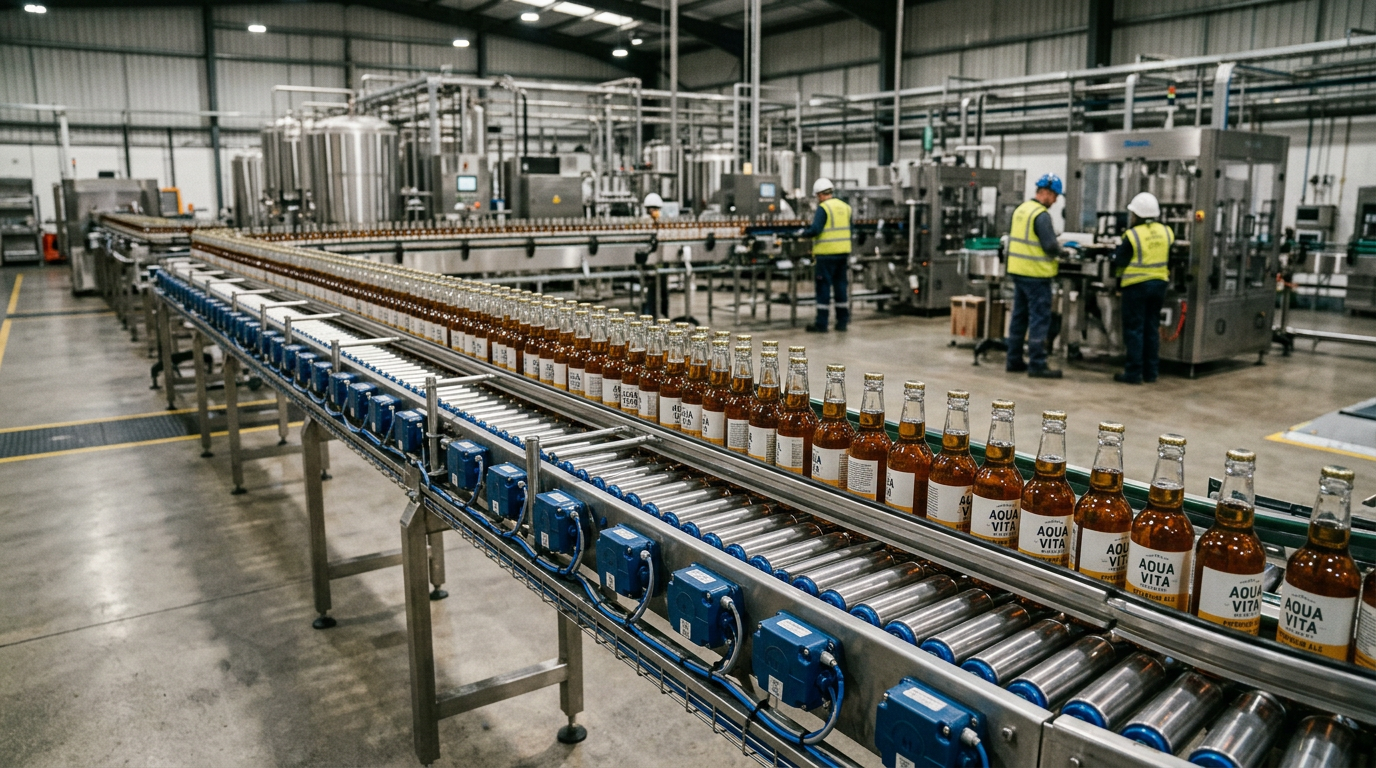
ZPA is the gold standard for modern packaging. Using sensors (typically photoelectric) and decentralized logic, the conveyor is divided into "zones." Each zone is powered by its own drive, often a 24V DC brushless motor. When a product reaches a zone and the downstream zone is occupied, the motor stops.
- Benefits: No product contact, reduced energy consumption (motors only run when moving product), and significantly lower noise levels.
- Standard Compliance: Modern ZPA systems often align with IEC 60034-30-1 efficiency classes for the integrated motors.
Minimum Pressure and Friction-Driven Systems
In applications where products are robust (e.g., plastic crates or heavy cardboard boxes), friction-driven accumulation is used. These systems use a continuously running chain or belt that "slips" beneath the product when it is stopped by a mechanical gate.
- Mechanical Slip-Clutch: Individual rollers are driven by a belt but can stop turning if resistance exceeds a certain threshold.
- Chain Accumulation: Common in heavy-duty pallet handling, using ISO 606 compliant chains with top rollers that allow the chain to move while the pallet remains stationary.
| Feature | Zero Pressure (ZPA) | Minimum Pressure | Spiral/Vertical Buffer |
|---|---|---|---|
| Product Contact | None (Gap maintained) | Low (Touching) | None to Low |
| Energy Efficiency | High (Run-on-demand) | Low (Continuous run) | Medium |
| Complexity | High (Sensors/PLCs) | Low (Mechanical) | High (Mechanical/Footprint) |
| Primary Use Case | Fragile packaging, E-commerce | Rigid cases, Pallets | High-density, Small footprint |
| Cost Tier | Premium | Economical | High |
Advanced Buffering: Spiral and Alpine Systems
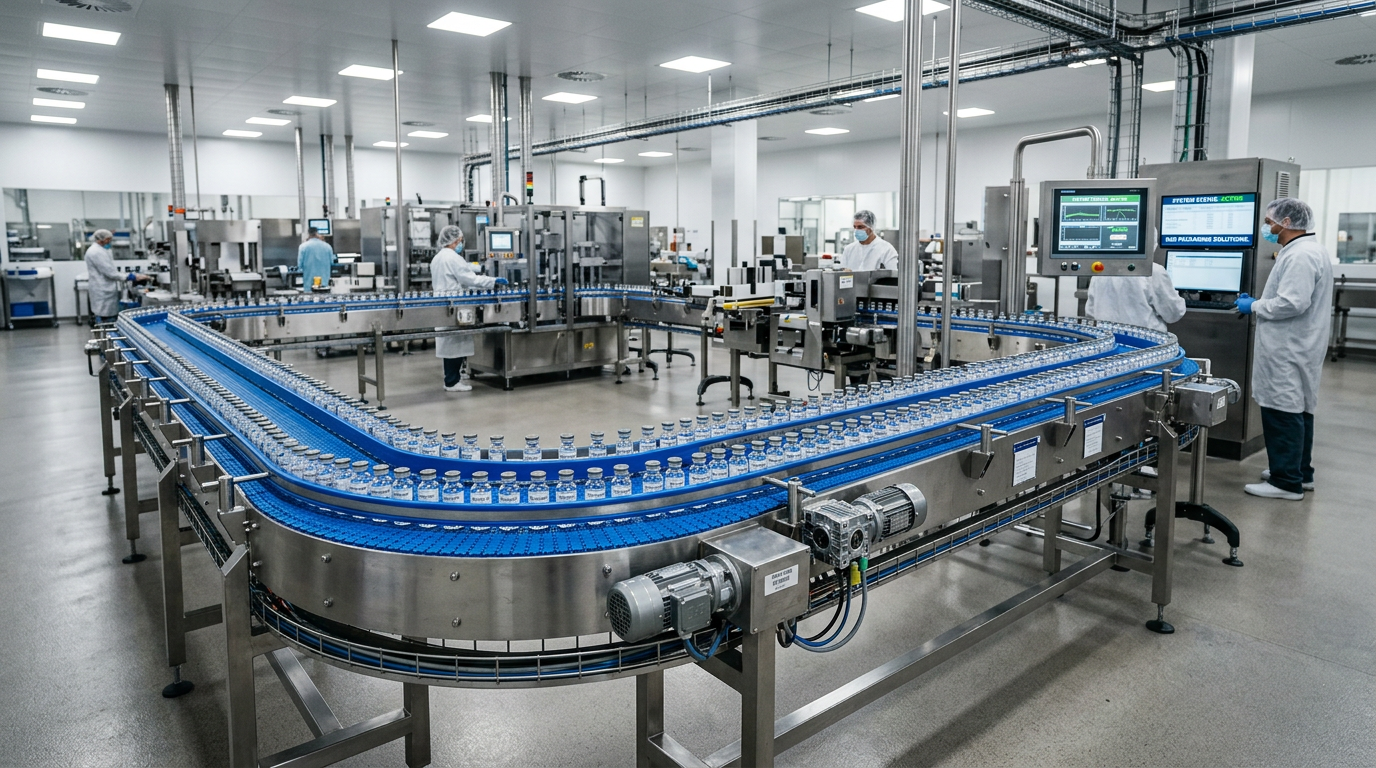
When floor space is at a premium, vertical accumulation becomes necessary. Alpine conveyors use a long, winding path (often utilizing modular plastic belts) to create a massive buffer in a small footprint.
For high-speed beverage or pharmaceutical lines, spiral accumulators offer a continuous flow solution. These systems allow for "first-in, first-out" (FIFO) product sequencing, which is critical for date-coded goods. For those looking for versatile European-engineered solutions, Easy Conveyors provides modular components that can be configured into high-density buffering zones, integrating seamlessly with existing packaging machinery.
Easy Conveyors stocks the material handling discussed here — ready to ship across Europe.
Control Logic and VFD Soft-Start Tuning
The intelligence of an accumulation system lies in its control logic. Integrating Variable Frequency Drives (VFDs) allows for "soft-start" and "soft-stop" cycles. This prevents the "accordion effect," where products jerky movements cause them to tip or crash.
When configuring a VFD for accumulation:
- Ramp-up Time: Should be tuned to match the inertia of the heaviest product load.
- Deceleration: Must be aggressive enough to stop within the sensor zone but smooth enough to prevent sliding.
- Communication: Modern systems utilize IO-Link or EtherNet/IP for real-time diagnostics of zone status.
Sizing and Calculation for Buffer Zones
To calculate the required length of an accumulation conveyor ($L$), use the following formula:
$$L = (R_{up} \times T_{stop}) \times d_{p} \times F_{s}$$
Where:
- $R_{up}$ = Upstream production rate (products per minute).
- $T_{stop}$ = Expected duration of downstream micro-stop (minutes).
- $d_{p}$ = Length of one product unit plus the required gap.
- $F_{s}$ = Safety factor (typically 1.15 to 1.25).
For example, a line running at 60 units/minute with a 2-minute buffer requirement and 300mm long products would require approximately 45 meters of accumulation space (including a 25% safety factor). In such scenarios, multi-lane accumulation or "reflow" systems are often used to fold this length into a manageable factory footprint.
Maintenance and Failure Modes
Accumulation systems are subject to unique wear patterns. In friction-driven systems, the interface between the drive media and the carrier (roller or belt) is a constant point of heat generation.
- Belt Glazing: In minimum pressure systems, the drive belt can become "glazed" or smooth from constant slipping, reducing its ability to move product when the gate opens.
- Sensor Fouling: In ZPA systems, dust or debris on photoelectric lenses can cause "false positives," leading to permanent "ghost" accumulation where a zone stays empty because it thinks a product is present.
- Chain Elongation: For chain-driven accumulators, regular checks for elongation as per VDMA guidelines are essential to prevent jumping on the drive sprockets.
Integrating hygienic wash-down design is also critical if the accumulation occurs in a primary packaging area, such as between a filler and a capper in food production. Ensuring that sensors and motors meet IP69K ratings prevents water ingress during high-pressure cleaning cycles.
Integrating Accumulation into the Digital Twin
In the era of Industry 4.0, accumulation conveyors are no longer "dumb" hardware. They are modeled as dynamic buffers in digital twin simulations. By analyzing real-time data from ZPA zones, plant managers can identify which downstream machine is causing the most "back-ups" and schedule predictive maintenance before a micro-stop turns into a full-shift shutdown. This integration often utilizes OPC-UA protocols for standardized data exchange between the conveyor logic and the MES (Manufacturing Execution System).
Strategic accumulation is the difference between a packaging line that feels "stressed" and one that flows smoothly. By selecting the right technology—whether it’s ZPA for fragile electronics or high-density alpines for food pouches—engineers can protect their OEE and ensure that the most expensive machines in the plant never have to wait for product.
Frequently Asked Questions
What is the difference between ZPA and minimum pressure accumulation?
ZPA uses sensors and individual motors to ensure products never touch, eliminating back-pressure and potential damage. Minimum pressure systems allow products to touch but use slip-clutch mechanisms to keep pressure low enough to prevent crushing.
How much accumulation time do I need for a standard packaging line?
Standard packaging buffers are typically sized to hold 3 to 5 minutes of upstream production. This allows enough time for common micro-stops like label roll changes or printer resets to be cleared without stopping the filler.
Can I use accumulation conveyors in facilities with limited floor space?
Yes, but it requires vertical solutions like Alpine or Spiral accumulators. These systems use the vertical space of the facility to create hundreds of meters of buffer path within a very small floor footprint.
Do I need a PLC for Zero Pressure Accumulation?
While ZPA can be implemented with any drive, 24V DC Roller Drives (MDR) are the most common because they are energy-efficient, easy to zone, and offer integrated logic for 'run-on-demand' operation.
What are the maintenance requirements for food-grade accumulation?
For wash-down environments, ensure all sensors and motors carry an IP69K rating. Using open-frame stainless steel construction and EHEDG-certified modular belts prevents bacterial growth in accumulation zones.