The Engineer’s Guide to Accumulation Conveyors for Buffer Management
Learn how accumulation conveyors and ZPA logic act as essential buffers in packaging lines to increase OEE, prevent product damage, and manage micro-stops.
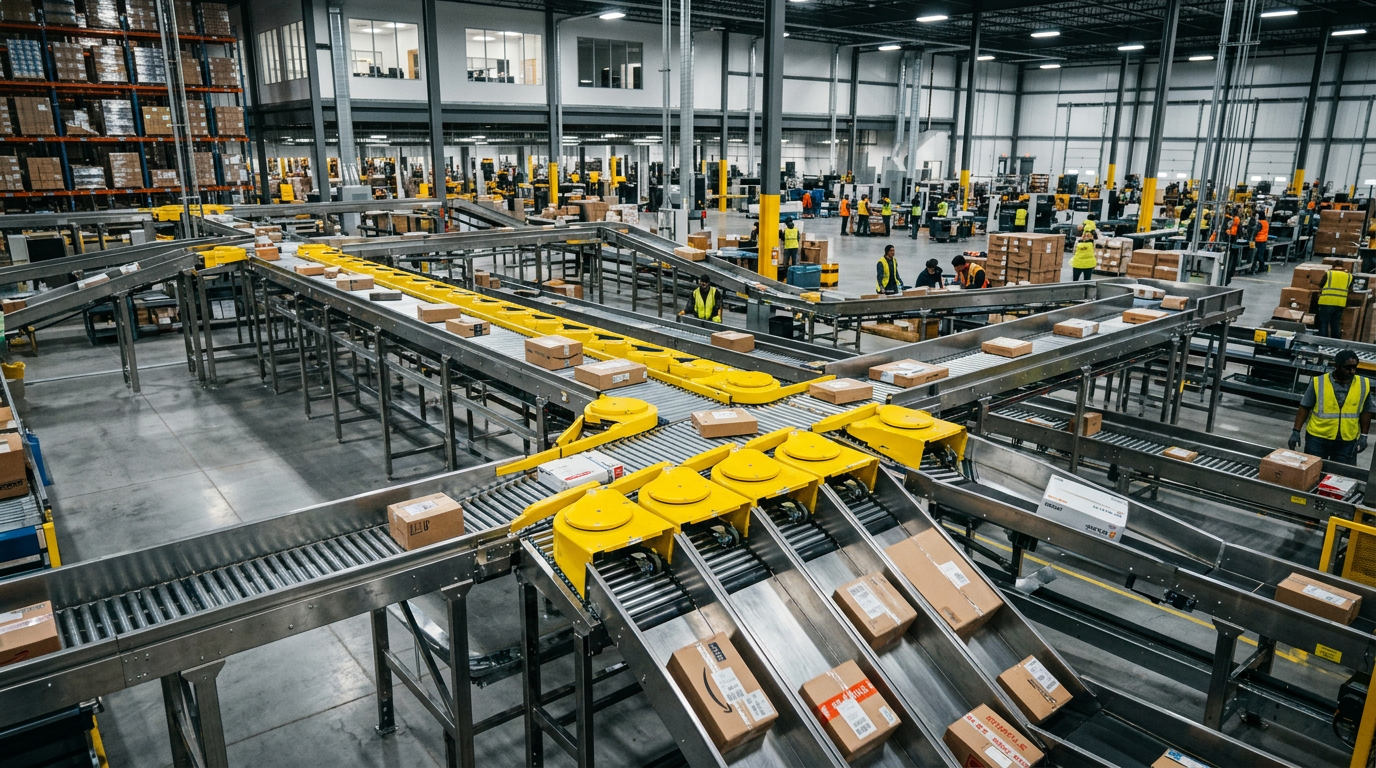
Accumulation conveyors serve as the primary "shock absorbers" in a packaging line, designed to decouple upstream production from downstream packaging by providing 2 to 10 minutes of buffer capacity. By managing product flow through Zero-Pressure Accumulation (ZPA), these systems can increase overall equipment effectiveness (OEE) by up to 15% by allowing upstream machines to continue running during minor downstream stoppages.
The Role of Accumulation in Packaging Lines
In an ideal manufacturing scenario, every machine in a line operates at the exact same speed with 100% reliability. In reality, packaging lines are subject to "micro-stops"—short interruptions caused by label roll changes, glue refills, or minor jams. Without a buffer, a 30-second stop at the case packer immediately halts the filler, which may require a 10-minute sterilization or restart cycle.
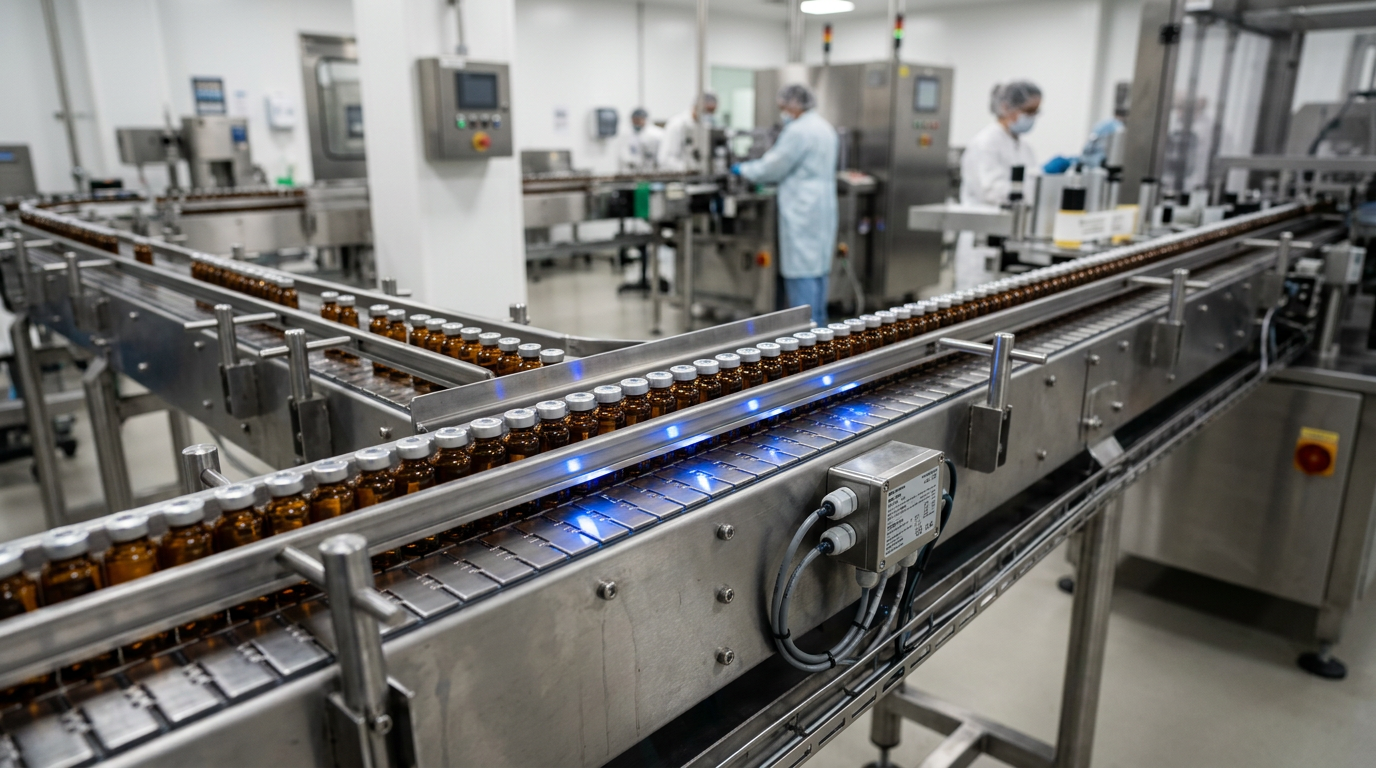
Accumulation conveyors mitigate this risk. By employing sophisticated sensor logic and zoned drive systems, they allow products to gather in a controlled manner. This is particularly critical in industries following FDA 21 CFR standards, such as pharmaceuticals and food production, where continuous flow is often a requirement for maintaining product integrity and thermal stability.
Zero-Pressure vs. Minimum-Pressure Accumulation
Choosing the right accumulation technology depends on the fragility of the product and the required throughput.
Zero-Pressure Accumulation (ZPA)
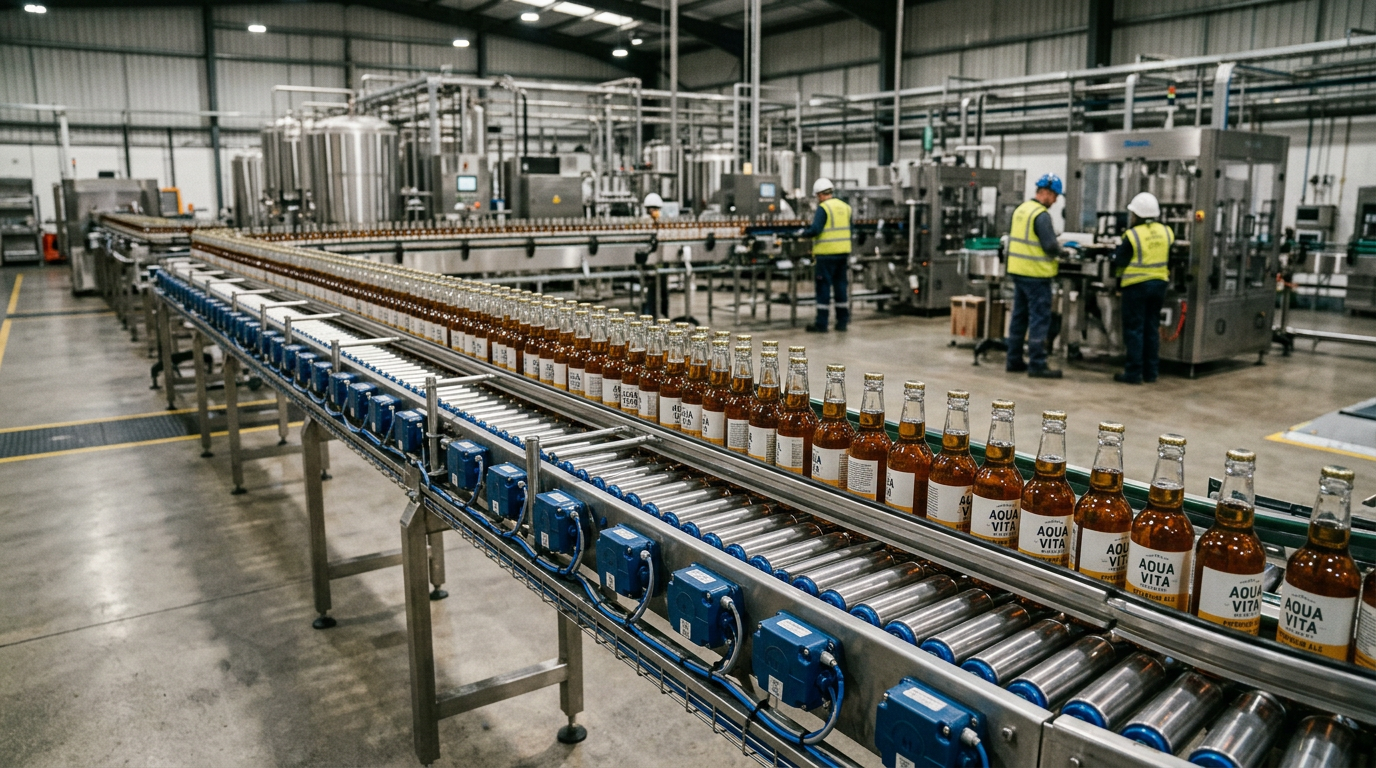
In ZPA systems, the conveyor is divided into discrete zones, typically driven by 24V DC Roller Drives. Each zone is equipped with a photo-eye sensor. When a zone is occupied and the downstream zone is also occupied, the motor stops. This ensures that products never touch, preventing crushing, scuffing, or "shingling" (where products overlap). ZPA is the gold standard for high-value packaging where label aesthetics are paramount.
Minimum-Pressure Accumulation
Minimum-pressure systems usually utilize a continuous running chain or belt with a low-coefficient of friction. When a downstream stop occurs, the products push against each other. The "minimum pressure" is achieved through specialized rollers or belt materials (like POM with low-friction additives) that allow the driving medium to slip underneath the stalled product. This is more cost-effective but can lead to product damage or "back-pressure" build-up on long runs.
| Comparison Metric | Zero-Pressure (ZPA) | Minimum Pressure | Multi-Lane Spiral |
|---|---|---|---|
| Product Contact | None | Low to Moderate | None |
| Logic Control | Distributed (ZPA Controllers) | Centralized/Mechanical | PLC Integrated |
| Energy Consumption | Low (Run-on-demand) | Continuous | Moderate |
| Typical Width | 300mm - 1000mm | 100mm - 600mm | Compact Vertical |
| Maintenance | Individual Zone Swaps | Belt/Chain Tensioning | High (Specialized) |
Advanced Buffer Management Strategies
Modern packaging environments require more than just a straight line of accumulation. Engineers often turn to modular systems to maximize floor space.
Vertical Accumulation and Spirals
When floor space is at a premium, vertical spiral accumulators provide hundreds of meters of buffer within a few square meters of footprint. These systems are highly effective in primary packaging (bottling and canning) where the "First-In-First-Out" (FIFO) principle is vital for batch tracking and shelf-life management.
Alpine Systems
An Alpine conveyor acts as a multi-tier buffer, often used for cooling or drying products between processes. By using long loops of modular plastic chain, an Alpine system can provide significant dwell time. For those designing these complex layouts, Easy Conveyors offers modular belt systems that simplify the integration of tight-radius curves and inclines required for compact buffering.
Easy Conveyors stocks the material handling discussed here — ready to ship across Europe.
Sizing Your Buffer Capacity
The most common mistake in material handling design is under-sizing the accumulation zone. To calculate the required buffer length, engineers use the formula:
L = (V * T) / D
- L: Length of accumulation (meters)
- V: Velocity of production (units per minute)
- T: Desired buffer time (minutes)
- D: Density of product (units per meter)
For example, if a line produces 120 bottles per minute, and you require a 3-minute buffer to handle a labeler reel change, with a product density of 10 bottles per meter, you need 36 meters of accumulation. In such cases, switching from a single-line ZPA to a mass-flow table or a multi-lane modular belt system is often more space-efficient.
Component Selection and Motor Efficiency
High-performance accumulation relies on efficient drive technology. The industry has shifted toward IEC 60034-30-1 IE3 and IE4 efficiency classes for larger gearmotors. However, for ZPA, the 24V/48V DC brushless motor (BLDC) has become the standard.
These motors offer:
- Integrated Braking: Essential for precise zone positioning.
- Variable Speed: Allowing the buffer to "empty" faster than it "fills" to recover capacity after a stop.
- Low Energy: Consumption occurs only when the zone is moving.
When integrating these into a wider plant architecture, communication protocols like EtherNet/IP or PROFINET are used to provide real-time data on buffer levels back to the central SCADA system. This allows for "dynamic speed control," where the upstream fillers automatically slow down as the buffer reaches 80% capacity, rather than coming to a hard stop.
Maintenance and Common Failure Modes
To maintain high OEE, accumulation systems require specific preventative maintenance:
- Sensor Calibration: Dust and debris on photo-eyes are the #1 cause of ZPA "false positives" or "blind spots." High-IP rated (IP67 or IP69K) sensors are recommended for wash-down packaging environments.
- Belt Tensioning: In minimum-pressure systems, improper tension can lead to surging, which damages fragile primary packaging.
- VFD Tuning: Properly configured VFD soft-start tuning prevents product toppling during high-speed accumulation restarts.
By treating the accumulation conveyor as a strategic asset rather than a simple connector, manufacturers can significantly insulate their primary production equipment from the inherent volatility of downstream packaging processes.
Frequently Asked Questions
How does Zero-Pressure Accumulation (ZPA) work?
ZPA uses sensors and individual motors to divide the conveyor into zones. A zone only moves if the next one is clear, ensuring products never touch. This is ideal for fragile or high-finish packaging.
How many minutes of buffer should a packaging line have?
The standard rule of thumb is to provide 3 to 5 minutes of buffer capacity for the most frequent micro-stops (e.g., label replacement). Critical processes may require up to 10 minutes.
Why is FIFO important in accumulation?
First-In-First-Out (FIFO) ensures that the first product to enter the buffer is the first to leave. This is critical for food and pharma to ensure batch integrity and proper date coding.
Can accumulation conveyors improve my Overall Equipment Effectiveness (OEE)?
Yes, by decoupling machines, accumulation prevents the 'domino effect' where a 30-second fault on one machine causes an hour of downtime across the entire line due to restart sequences.