Maximizing Throughput with Accumulation Conveyors for Buffer Management
Learn how accumulation conveyors optimize packaging lines using ZPA and LBP logic to prevent downtime. Master buffer sizing and energy efficiency standards.
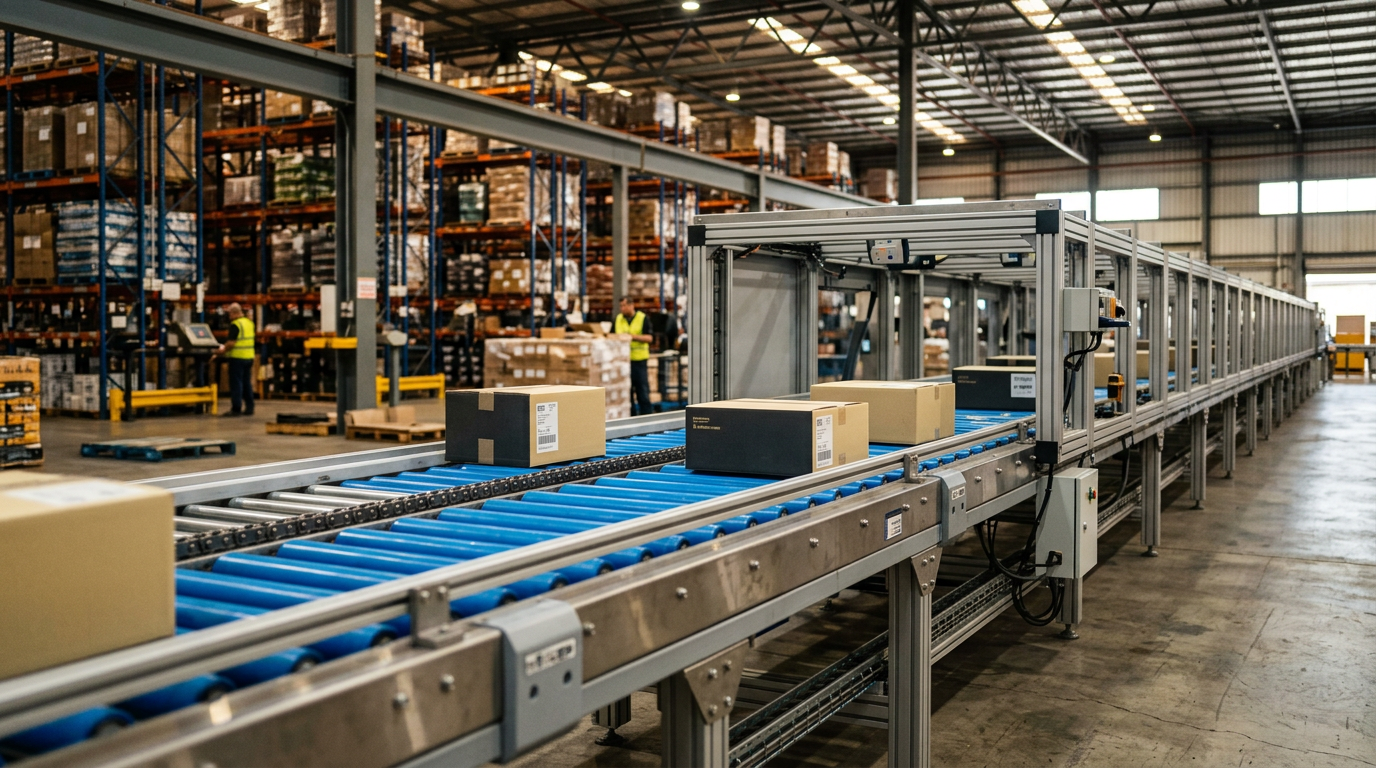
Accumulation conveyors function as the physical "cache" of an automated production line, utilizing low-back-pressure or zero-pressure logic to decouple upstream processing from downstream packaging. By maintaining a buffer capacity of at least 5 to 10 minutes of production, these systems ensure that a minor stoppage on a palletizer or labeler does not trigger a catastrophic "E-stop" event on the primary filler or manufacturing unit.
The Role of Buffer Management in Modern Packaging
In a perfectly synchronized world, every machine in a packaging line would run at the exact same speed. In reality, modern high-speed lines suffer from "micro-stops"—brief interruptions for label roll changes, glue refills, or minor jams. Without effective buffer management, a 30-second stop at the end of the line travels backward at the speed of the belt, forcing the entire operation to halt.
Accumulation conveyors mitigate this by absorbing the output of upstream machines while the downstream equipment recovers. This is measured by the V-Graph or "V-profile" analysis, a method used to determine the optimal speed and surge capacity of each section to maximize throughput.
Types of Accumulation Technology
Choosing the right accumulation method depends on the fragility of the product, the required density, and the budget for control sophistication.
1. Zero Pressure Accumulation (ZPA)
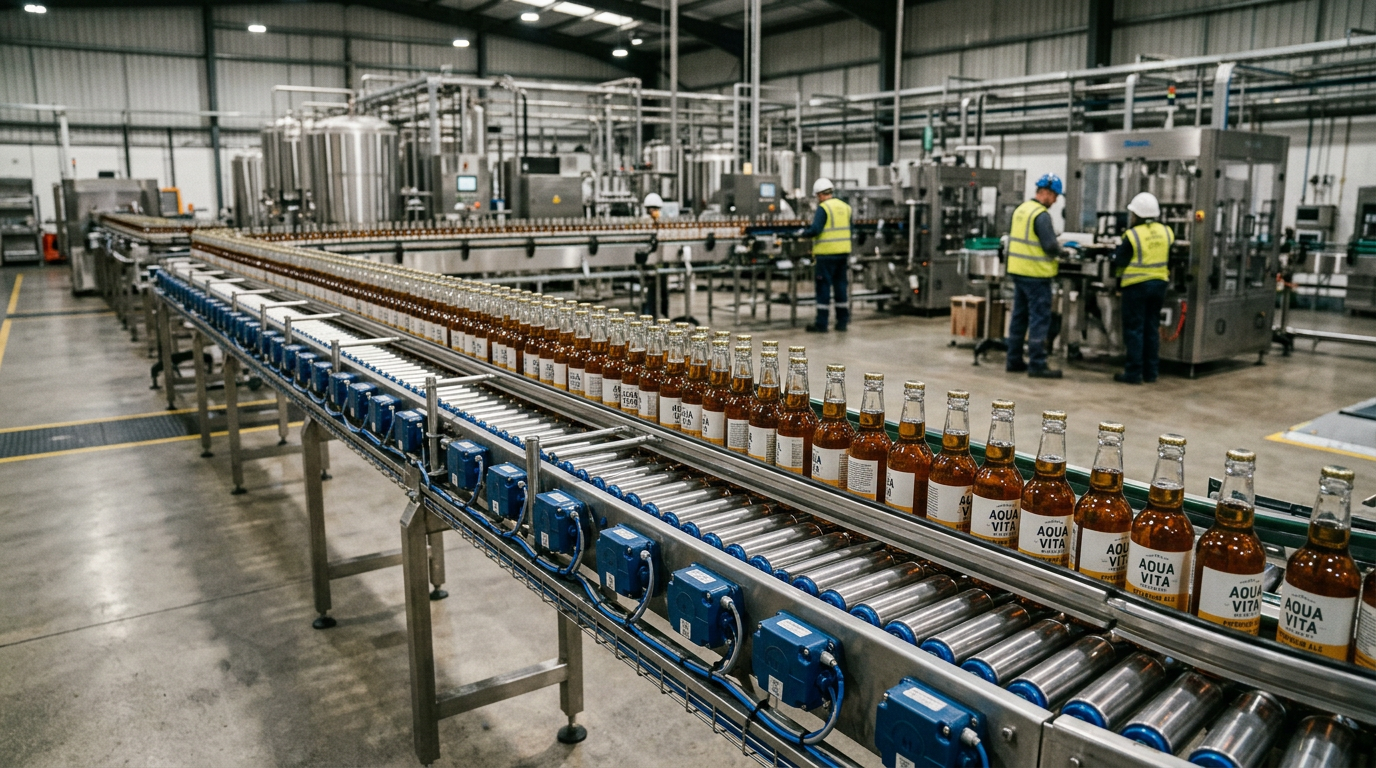
ZPA is the gold standard for fragile or high-value goods. The conveyor is divided into discrete zones, each powered by a motorized roller or a pneumatic clutch. Sensors (usually photo-eyes) detect the presence of a product. If the downstream zone is occupied, the current zone stops. This ensures products never touch, preventing crushing or scuffing. Most ZPA systems today utilize IEC 60034-30-1 IE3 or IE4 efficiency class motors to minimize energy consumption during frequent start-stop cycles.
2. Low Back Pressure (LBP)
LBP conveyors use specialized rollers or modular belts with embedded "free-spinning" rollers. When the flow is blocked, the belt continues to move under the product, but the rollers spin freely, reducing the forward force (back pressure). This is a cost-effective solution for sturdy items like plastic crates or heavy secondary packaging, though it still results in product-to-product contact.
3. Vertical and Alpine Accumulation
When floor space is at a premium, alpine conveyors spiral upward to create a long buffer path in a small footprint. These are often seen in bottling and food processing where cooling or drying time is required simultaneously with accumulation.
Technical Comparison of Accumulation Methods
| Feature | Zero Pressure (ZPA) | Low Back Pressure (LBP) | Spiral/Alpine |
|---|---|---|---|
| Product Contact | None (Gap maintained) | Continuous (Low force) | Continuous/Gapped |
| Energy Efficiency | High (Zone-based sleep) | Medium (Constant runtime) | Medium |
| Complexity | High (Logic/Sensors) | Low (Mechanical) | Moderate |
| Footprint Efficiency | Standard | Standard | Excellent (Vertical) |
| Typical IP Rating | IP66/IP67 | IP54/IP65 | IP54/IP66 |
| Best For | Glass bottles, electronics | Cardboard boxes, crates | Cans, snack pouches |
Design Considerations: The Physics of Buffer Capacity
When sizing an accumulation system, engineers must calculate the Accumulation Ratio. This is the ratio between the time the upstream machine takes to fill the buffer and the time the downstream machine ta
Easy Conveyors stocks the material handling discussed here — ready to ship across Europe.
kes to clear it. A common rule of thumb is to design for a buffer that can handle 1.2 to 1.5 times the expected duration of a standard consumable changeover (e.g., a tape head or label reel swap).
Key variables include:
- Pitch (P): The center-to-center distance between products.
- Velocity (V): The speed required to "pull a gap" and evacuate the buffer once the downstream stop is cleared.
- Mass (M): Total weight in the buffer, which dictates the torque requirements for motor startup.
For manufacturers looking to integrate these complex sub-systems, Easy Conveyors provides modular roller and belt components designed specifically for rapid assembly of ZPA and LBP lines.
Integration with Industrial Automation
Modern buffer management is no longer a "dumb" mechanical process. It is integrated into the plant's SCADA or MES (Manufacturing Execution System). By using Variable Frequency Drives (VFDs) and PLC logic, the conveyor can implement "Dynamic Buffering."
In a dynamic setup, the belt speed is not binary (on/off). Instead, the PLC monitors the buffer fill level. If the buffer is 20% full, the conveyor runs at nominal speed. At 80% capacity, it may signal the upstream filler to ramp down speed by 10% to prevent a hard stop. This "software-first" approach to material handling significantly extends the life of mechanical components like gearmotors and bearings by reducing high-torque "jerk" movements. For further insights on optimizing these drives, see our guides on VFD soft-start tuning and drum motor selection.
Hygiene and Safety Standards
In food and pharmaceutical packaging, accumulation zones must adhere to strict sanitary guidelines. The EHEDG (European Hygienic Engineering & Design Group) and FDA emphasize the need for "clean-in-place" capabilities. Since accumulation belts often have more moving parts (like rollers in LBP belts), they can be harder to sanitize.
Engineers should specify:
- Open-frame designs for easy washdown.
- FDA-compliant materials (e.g., blue POM for modular belts).
- Food-grade lubricants in all motorized rollers.
Furthermore, safety under OSHA standards requires that long accumulation runs have accessible E-stops and guarding, particularly where "pinch points" occur between accumulating products and fixed guides.
Common Failure Modes in Buffer Systems
- Sensor Blindness: In ZPA systems, dust or debris can coat photo-eye lenses, causing "false positives" where the zone thinks a product is present and stops permanently.
- Harmonic Oscillation: In high-speed LBP lines, products can begin to vibrate or "chatter" against each other, leading to label damage or packaging scuffing.
- Belt Elongation: Continuous accumulation creates high tension. Over time, plastic modular belts can stretch beyond the take-up unit's capacity, requiring the removal of links.
Optimizing these systems involves more than just hardware; it requires a deep understanding of product flow dynamics. High-performance lines often combine multiple technologies—using hygienic wash-down design for primary packaging and standard ZPA for the end-of-line case packing section. In environments where space is a constraint, a spiral conveyor offers the ultimate buffer-to-footprint ratio.
Frequently Asked Questions
What is the difference between ZPA and LBP conveyors?
Zero Pressure Accumulation (ZPA) uses sensors and zoned motors to keep products from touching, while Low Back Pressure (LBP) allows products to touch but uses free-spinning rollers to minimize the forward force (back-pressure) to prevent damage.
How much buffer capacity do I need for my packaging line?
A standard buffer should account for 1.2 to 1.5 times the duration of the most frequent minor stop (e.g., a 3-minute label roll change requires roughly 4.5 minutes of accumulation capacity).
Are accumulation conveyors energy-intensive?
ZPA systems are highly energy-efficient because they only run the specific 'zones' where a product is moving. When no product is present, the motors enter a sleep mode, reducing power consumption and wear.
Can accumulation conveyors be used in wash-down food environments?
Yes, but they require careful selection of materials. Look for EHEDG-certified components and FDA-compliant modular belts with an open-hinge design to allow for effective spray-down cleaning.