Optimizing Packaging Lines with Accumulation Conveyors for Buffer Management
Learn how accumulation conveyors optimize packaging lines by providing critical buffer capacity, increasing OEE by up to 25%, and protecting product integrity.
Accumulation conveyors serve as the critical "shock absorber" in high-speed packaging lines, providing buffer capacities typically ranging from 2 to 10 minutes of production time to decouple upstream and downstream processes. By allowing upstream machines to continue running during minor downstream stoppages (and vice versa), these systems can increase overall equipment effectiveness (OEE) by 15% to 25% in automated packaging environments.
The Role of Buffer Management in Packaging
In a perfectly synchronized packaging line, every machine would operate at the exact same speed with zero downtime. However, reality involves labeler jams, film roll changes, and palletizer resets. Without effective buffer management, a 30-second stop at the case packer immediately halts the entire line, including the filler and blow-molder.
Buffer management through accumulation conveyors allows for the temporary storage of products without stopping the flow of the entire system. This is particularly vital in industries like food and beverage or pharmaceuticals, where stopping a process—such as a continuous pasteurizer or a sterile filling station—can result in significant product waste or re-validation requirements.
Key Technologies in Accumulation Systems
Selecting the right accumulation method depends on product fragility, throughput requirements, and available floor space. The industry has moved toward low-pressure or zero-pressure solutions to protect product integrity.
Zero Pressure Accumulation (ZPA)
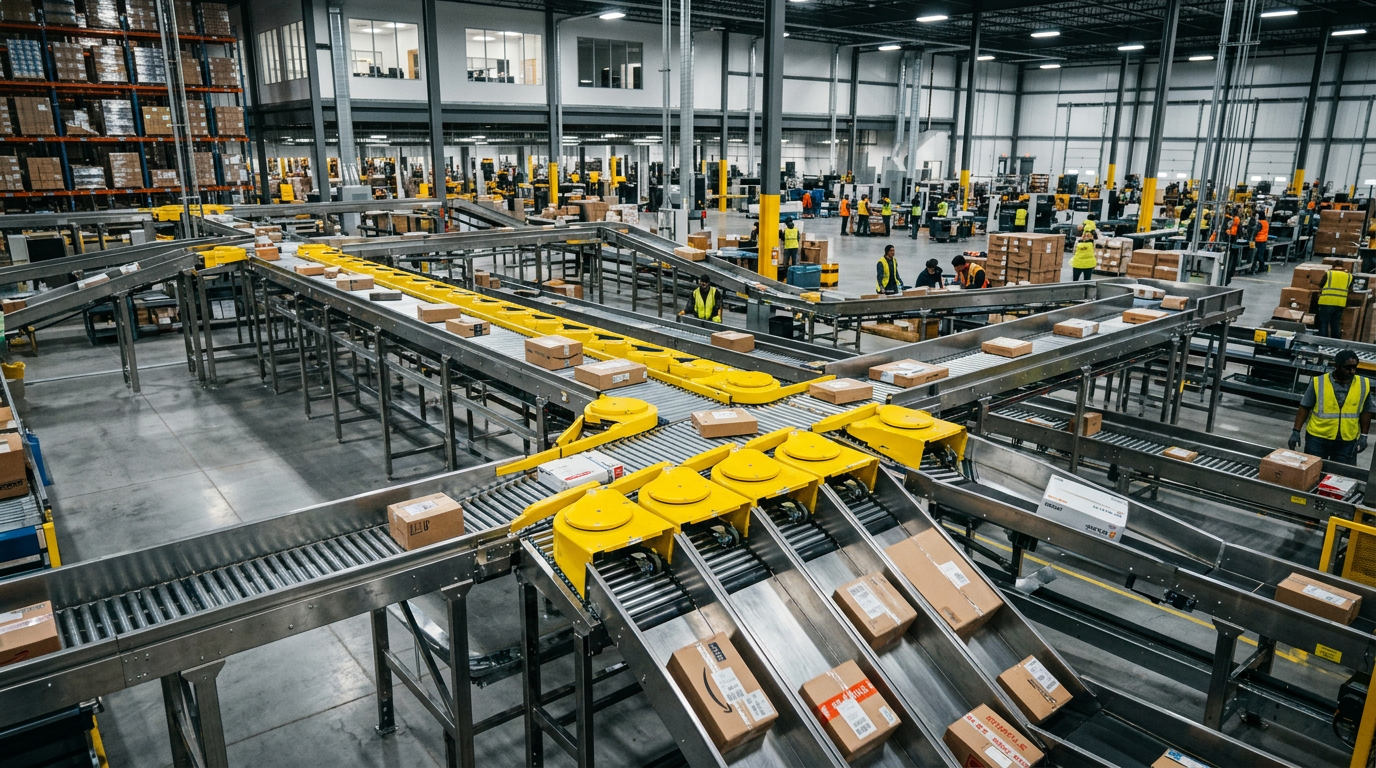
ZPA systems use sensors and zone controllers to ensure that products never touch one another. Each "zone" is slightly longer than the product itself. When a zone downstream is occupied, the upstream zone stops. This is the gold standard for fragile packaging or e-commerce parcels where crushing must be avoided. Most ZPA systems utilize 24V DC motorized drive rollers (MDR) for granular control and energy efficiency.
Zero Tangential Pressure (ZTP)
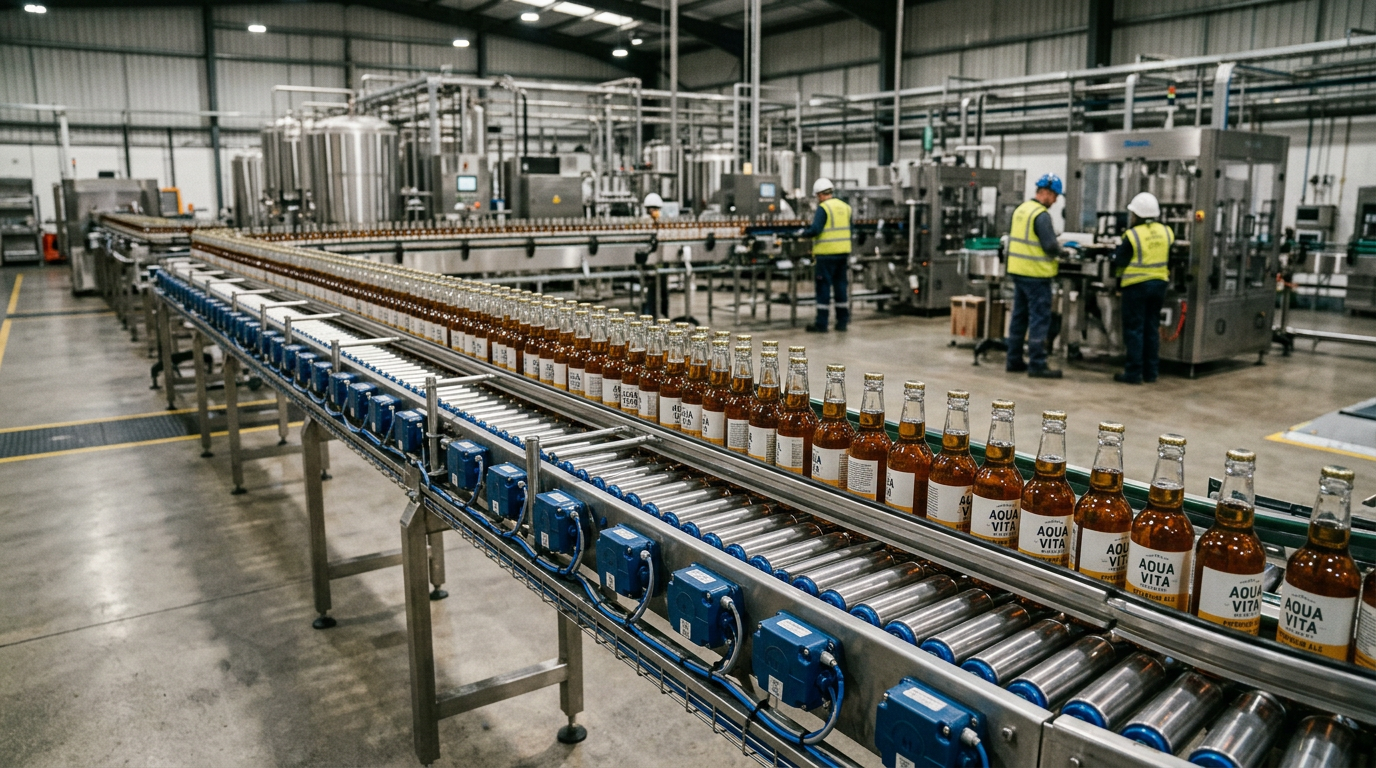
Often used in high-speed bottling and canning, ZTP systems use modular plastic belts or chains that move laterally or utilize sophisticated "racetrack" designs. The goal is to accumulate high volumes of product while minimizing the backpressure exerted on the leading containers.
Spiral Accumulators
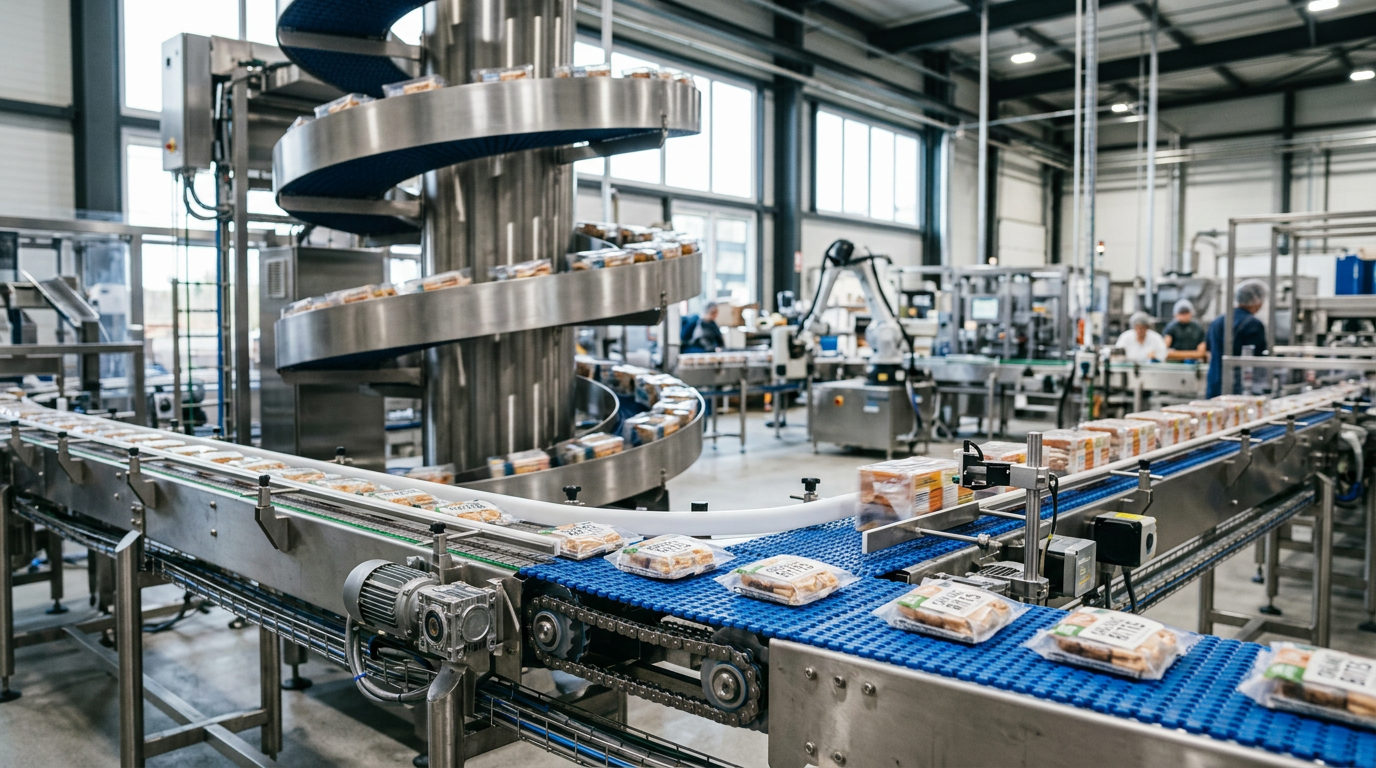
When floor space is at a premium, vertical spiral accumulators provide high-density buffering. These systems can store hundreds of meters of product within a compact footprint by utilizing vertical height.
Comparing Accumulation Methods
| Feature | Zero Pressure (ZPA) | Spiral Accumulators | Table-Top (Mass) |
|---|---|---|---|
| Product Contact | None (Singulated) | Contact likely | High backpressure |
| Footprint | High (Linear) | Extremely Low | Medium to High |
| Typical Speed | 30–60 m/min | Up to 60 m/min | 20–40 m/min |
| Complexity | High (Sensors/PLC) | Medium (Mechanical) | Low |
| Energy Efficiency | High (On-demand) | Medium | Low (Constant run) |
| Hygiene Rating | Standard to IP66 | Often Washdown | Varies |
Easy Conveyors stocks the material handling discussed here — ready to ship across Europe.
Engineering Principles for Buffer Sizing
Determining the required length of an accumulation conveyor is a function of the Mean Time to Repair (MTTR) of the downstream equipment. If a labeler has a common jam that takes 90 seconds to clear, and the line runs at 60 units per minute, the buffer must accommodate at least 90 units plus a safety margin.
$$Buffer Capacity = (MTTR \times Throughput) \times Safety Factor$$
For many European manufacturers, modularity is key to future-proofing these calculations. Easy Conveyors provides modular roller and chain systems that allow for rapid extension or reconfiguration of buffer zones as production demands change. This modularity is essential when transitioning from manual packing to full automation, where the "bottleneck" of the line often shifts.
Control Strategies and Automation
Modern accumulation systems are rarely "dumb" mechanical buffers. They are integrated into the factory's overarching control architecture, often utilizing EtherNet/IP or PROFINET protocols for real-time status monitoring.
- Dynamic Speed Control: The conveyor speed is modulated based on the "fullness" of the buffer. As the buffer fills, upstream speeds may gradually ramp down rather than stopping abruptly.
- VFD Soft-Start Tuning: To prevent product tipping, Variable Frequency Drives (VFDs) must be tuned with specific acceleration and deceleration ramps.
- Sensor Placement: Photoelectric sensors must be positioned to account for product gaps and transparent packaging materials, often requiring specialized "clear object" detection sensors.
Design Standards and Safety
When designing accumulation systems, adherence to international standards ensures both safety and interoperability. Components should meet IEC 60034-30-1 for motor efficiency classes (IEC), ensuring that the continuous starting and stopping of accumulation zones doesn't lead to excessive energy waste.
In food and pharmaceutical packaging, hygiene is paramount. Systems should be designed following EHEDG guidelines to prevent bacterial harborages (EHEDG). This includes using open-frame designs and materials that withstand aggressive cleaning agents (CIP/SIP). Furthermore, all conveyor systems must comply with ISO 13849-1 for the safety of machinery, particularly regarding the guarding of pinch points in accumulation zones where products may bunch together (ISO).
Failure Modes and Maintenance
Accumulation conveyors are subject to unique wear patterns compared to transport conveyors.
- Zone Controller Fatigue: In ZPA systems, the constant switching of 24V controllers can lead to premature failure if the duty cycle is exceeded.
- Belt Stretching: In mass accumulation systems, the high backpressure can cause modular belts to stretch, requiring regular checks of the catenary sag or tensioner position.
- Sensor Fouling: Dust from cardboard packaging or moisture from washdown cycles can blind sensors, leading to "false full" signals that halt production.
Implementing a predictive maintenance schedule, focused on monitoring motor current draw and sensor signal strength, can prevent the buffer system from becoming the very source of downtime it was designed to prevent. Utilizing high-quality modular components ensures that when wear does occur, parts can be swapped in minutes rather than hours.
Frequently Asked Questions
What is the difference between Zero Pressure and Low Pressure accumulation?
Zero Pressure Accumulation (ZPA) uses sensors to ensure products never touch, preventing damage. Low Pressure Accumulation allows products to touch but minimizes the force exerted between them using specialized rollers or belts.
How do I calculate the required length for an accumulation conveyor?
The required buffer length is calculated by multiplying the Mean Time to Repair (MTTR) of the downstream bottleneck by the line speed (units/minute), typically adding a 10-20% safety margin.
When should I use a spiral accumulator instead of a horizontal buffer?
Vertical spirals provide the highest storage density per square meter of floor space, making them ideal for facilities with limited footprints but sufficient ceiling height.
Are Motorized Drive Rollers (MDR) better for accumulation?
MDRs are highly energy-efficient because they only run when a product needs to move into or out of a specific zone, unlike traditional conveyors that run continuously.