Accumulation Conveyors for Buffer Management in Packaging Systems
Optimize packaging line efficiency with accumulation conveyors. Learn how buffer management prevents downtime using ZPA, alpine, and minimum pressure systems.
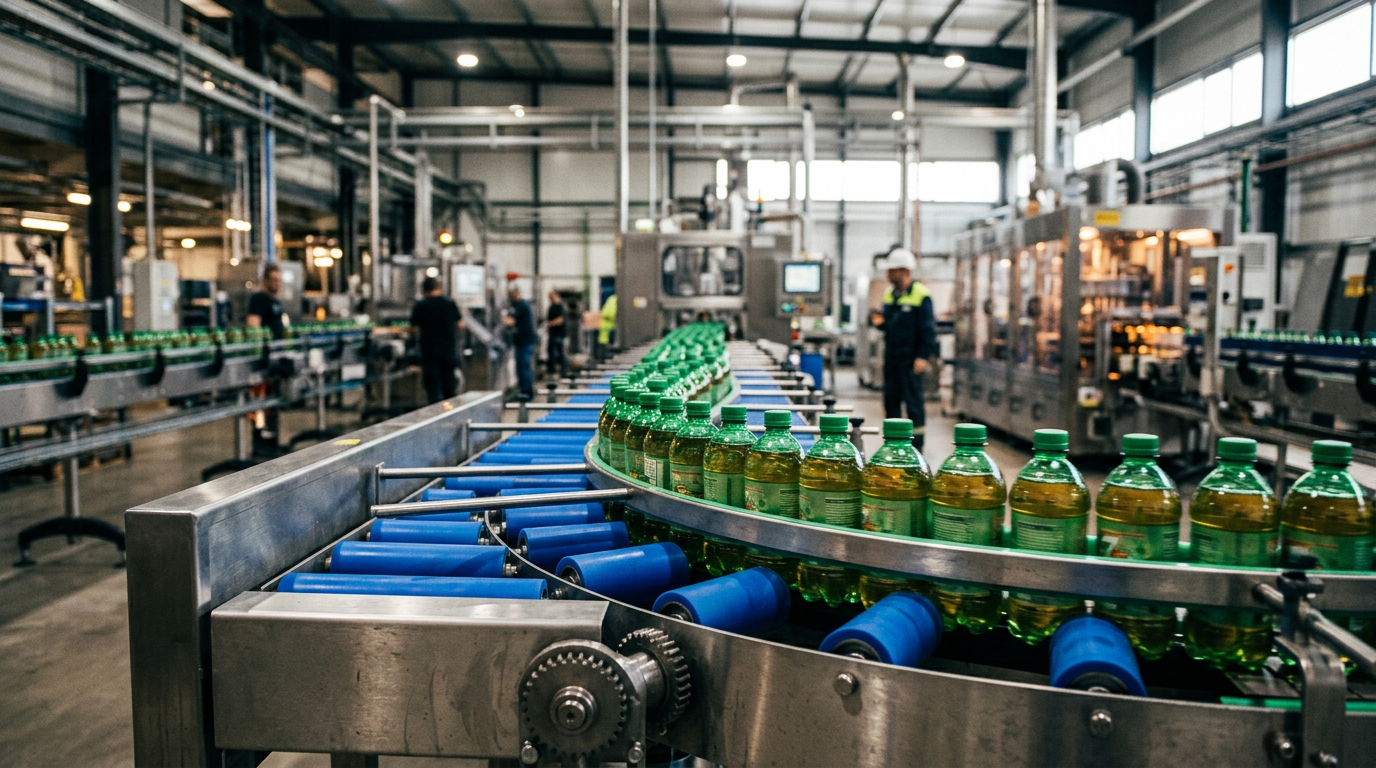
Effective buffer management in packaging depends on accumulation conveyors that provide a dynamic storage capacity between mismatched cycle times, typically requiring a 10% to 20% surge capacity to prevent upstream stoppages during downstream machine tool changes or label replacements. By decoupling sequential processes, these modular systems ensure that a 30-second localized failure does not result in a plant-wide E-stop.
The Role of Accumulation in Packaging Lines
In high-speed packaging environments—such as beverage bottling, pharmaceutical blister packing, or e-commerce fulfillment—the total efficiency of the line is determined by the "Constraint" or the "Bottleneck." However, even the most efficient lines suffer from micro-stops. A labeler might run out of ribbon, or a case sealer might jam for 45 seconds.
Without a sophisticated buffer management strategy, these minor interruptions cascade backward through the system. For instance, if a filler (the most expensive asset) must stop because the downstream palletizer is waiting on a pallet, the lost throughput is irrecoverable. Accumulation conveyors act as a "thermal mass" for production flow, absorbing the kinetic energy of surplus products when the downstream goes cold and releasing it once clear.
Types of Accumulation Systems
Buffer management is not a one-size-fits-all solution. Depending on the fragility of the product, the required throughput, and the available floor space, engineers typically select from three primary technologies.
1. Zero Pressure Accumulation (ZPA)
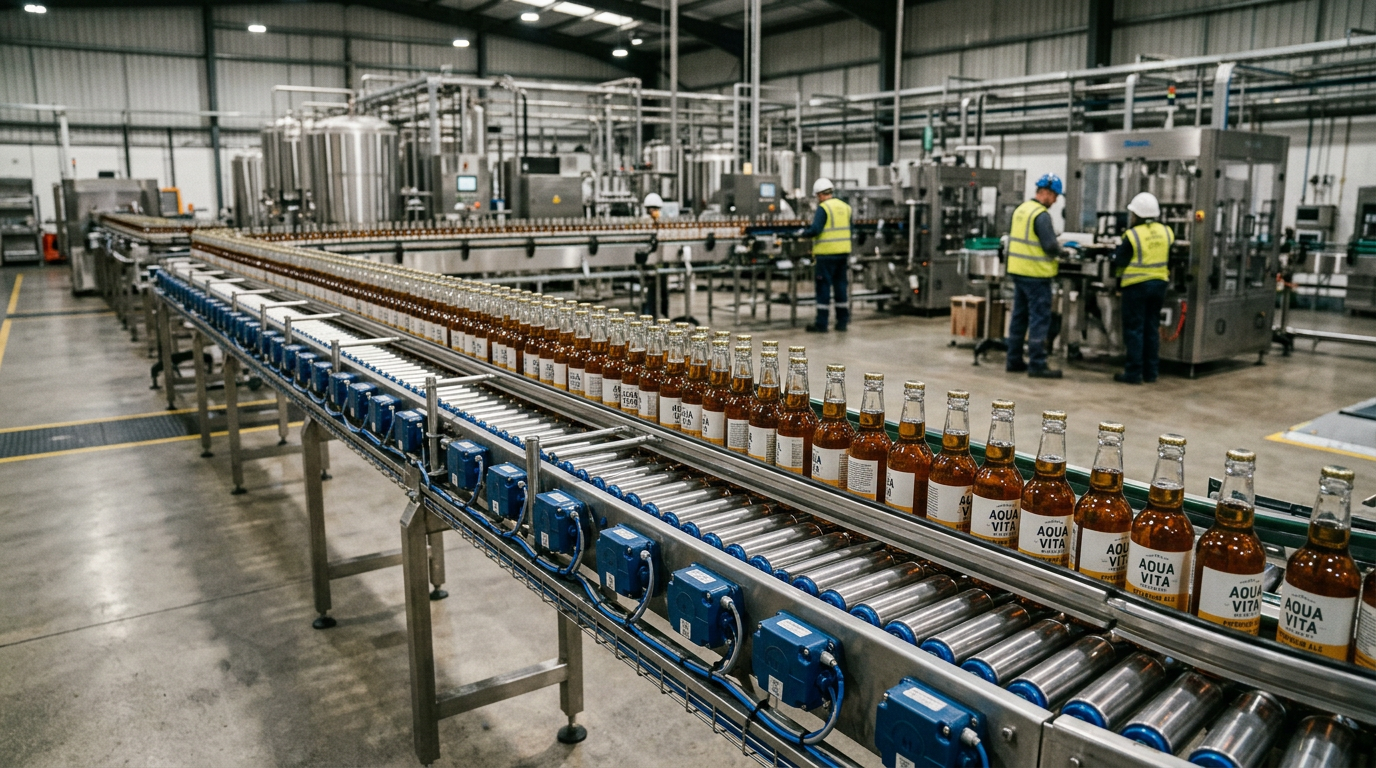
ZPA is the gold standard for fragile or high-value goods. In a ZPA system, products are divided into "zones." Sensors (usually photo-eyes) detect the presence of a package. When a downstream zone is occupied, the upstream motor stops before the next package makes contact. This eliminates back-pressure, which is critical for preventing product damage or "shingling" (where thin products slide under each other).
2. Minimum Pressure Accumulation
This method utilizes low-friction rollers or modular belts that continue to slip underneath the product when it is stopped by a mechanical gate. While cost-effective, it creates constant friction and heat, and the accumulated back-pressure can eventually crush lightweight cardboard boxes or tip over tall, unstable containers.
3. Vertical and Alpine Buffers
When floor space is at a premium, alpine conveyors use a spiral configuration to stack product vertically. These are particularly useful in cooling or curing processes where the product needs "dwell time" while moving from point A to point B.
Technical Comparison: Accumulation Technologies
| Feature | Zero Pressure (ZPA) | Minimum Pressure | Spiral/Alpine |
|---|---|---|---|
| Back Pressure | Zero | Moderate/High | Variable |
| Energy Efficiency | High (Run-on-demand) | Low (Continuous slip) | Moderate |
| Product Fragility | Excellent for glass/electronics | Best for robust cases | Best for small footprints |
| Control Complexity | High (PLC/Logic per zone) | Low (Mechanical) | Moderate |
| Maintenance Cost | Low (Less wear) | High (Roller/Belt wear) | Moderate |
Design Considerations for Buffer Management
When sizing a buffer for a packaging line, engineers must calculate the Mean Time to Repair (MTTR) of the most volatile downstream component.
Calculating Buffer Capacity
A common rule of thumb is to design for a buffer that holds enough product to cover the most frequent micro-stop duration. If a labeler refill takes 90 seconds and the line speed is 60 units per minute, the accumulation system must be able to hold at least 90 units without stopping the upstream filler.
Integration with Modular Systems
Modern modular conveyor platforms have revolutionized how buffers are deployed. Standardized sections can be swapped out or extended as production needs evolve. For companies looking to implement highly flexible layouts, Easy Conveyors provides modular roller and plastic chain systems that are specifically engineered for rapid integration into existing packaging architectures.
Easy Conveyors stocks the material handling discussed here — ready to ship across Europe.
Advanced Control: Distributed Logic vs. Centralized PLC
The intelligence behind the accumulation is as vital as the hardware.
- Distributed Logic: Modern ZPA systems often use "smart" motor-driven rollers (MDR) where the logic is embedded in the controller card of the roller itself. This reduces the load on the main PLC and simplifies the wiring.
- Centralized Control: For complex "First-In, Last-Out" (FILO) or "First-In, First-Out" (FIFO) sequences, a centralized PLC managing VFD soft-start tuning and encoder feedback is necessary to ensure precise product spacing.
Common Failure Modes in Accumulation
- Sensor Fouling: In dusty environments or wash-down zones (IP69K), photo-eyes can become obscured. Switching to ultrasonic sensors or high-contrast laser sensors can mitigate these issues in "hygienic wash-down design" environments.
- Improper Friction Coefficients: If the "minimum pressure" rollers have too much grip, the back-pressure buildup can cause motor over-current trips or belt stretching.
- Communication Latency: In high-speed ZPA lines, a delay in the Ethernet/IP or IO-Link signal can result in "collisions" between zones.
Sustainability and IE3 Efficiency
In the European market especially, energy consumption is a primary KPI. ZPA systems are inherently more sustainable because they operate on a "per-zone" basis. If no product is present, the motor remains off. When combined with IE3 motor classes, these systems can reduce energy consumption by up to 40% compared to traditional continuous-run friction accumulation lines. This is a critical factor when designing for long-term operational cost reduction in "material handling" and warehouse automation.
Summary of Selection Criteria
Selecting the right accumulation method requires balancing the sensitivity of your product against the required throughput. For e-commerce polybags, ZPA is non-negotiable to prevent jams. For rigid plastic bottles, a simple modular belt table-top buffer might suffice. Always prioritize systems that allow for future expansion, as packaging formats and line speeds are likely to change long before the conveyor reaches its mechanical end-of-life.
Frequently Asked Questions
What is Zero Pressure Accumulation?
Zero Pressure Accumulation (ZPA) is a conveyor technology where products are divided into zones; sensors ensure that items never touch each other, eliminating back-pressure and preventing product damage.
How do I calculate required buffer size?
Buffer capacity should typically cover the Mean Time to Repair (MTTR) of the most frequent downstream micro-stop, usually calculated as: (Line Speed per Minute) x (Shortest Maintenance Duration).
What is the difference between ZPA and minimum pressure?
Minimum pressure accumulation allows product to touch and creates back-pressure as the belt slips underneath; ZPA uses sensors to maintain a physical gap between products, eliminating touch and pressure entirely.
When should I use an Alpine conveyor for buffering?
Alpine conveyors use a spiral, multi-tier design to provide significant accumulation length in a very small horizontal footprint, making them ideal for cramped factory floors.
Can accumulation conveyors improve energy efficiency?
Yes, by using 'run-on-demand' technology, accumulation systems like ZPA only consume power when moving product, significantly reducing energy costs compared to continuous-slip systems.