Optimizing Accumulation Conveyors for Buffer Management in Packaging
Learn how accumulation conveyors act as vital buffers in packaging lines to prevent downtime, featuring a comparison of Zero-Pressure vs. Low-Pressure technologies.
Accumulation conveyors are the vital "shock absorbers" of a high-speed packaging line, providing a buffer capacity typically sized to handle 3 to 5 minutes of downstream downtime without halting upstream production. By decoupling sequential processes—such as primary filling, secondary cartoning, and final palletizing—these systems prevent a minor fault in one machine from cascading into a total facility stoppage.
The Role of Buffer Management in Modern Packaging
In a perfectly synchronized world, every machine in a packaging line would run at the exact same speed with 100% uptime. In reality, according to VDMA standards for machine availability, the "OEE gap" is often caused by micro-stops and synchronization failures. When a labeler jams or a case sealer requires a tape roll change, the upstream filler cannot simply stop instantly without risking product waste or mechanical strain.
This is where accumulation conveyors take the stage. They serve as dynamic storage zones that hold products in a controlled queue. Effective buffer management depends on three primary variables:
- Throughput Requirements: The number of units per minute (UPM) that must be absorbed.
- Product Sensitivity: Whether the product can handle "back pressure" (shunting against other units) or requires "zero-pressure" spacing.
- Recovery Speed: The ability of the downstream equipment to run at a "catch-up" speed (typically 15-20% faster than the nominal rate) to clear the accumulated buffer once the fault is resolved.
Methods of Accumulation: Zero-Pressure vs. Low-Pressure
Choosing the right accumulation technology is the difference between a smooth-running line and one plagued by product damage.
Zero-Pressure Accumulation (ZPA)
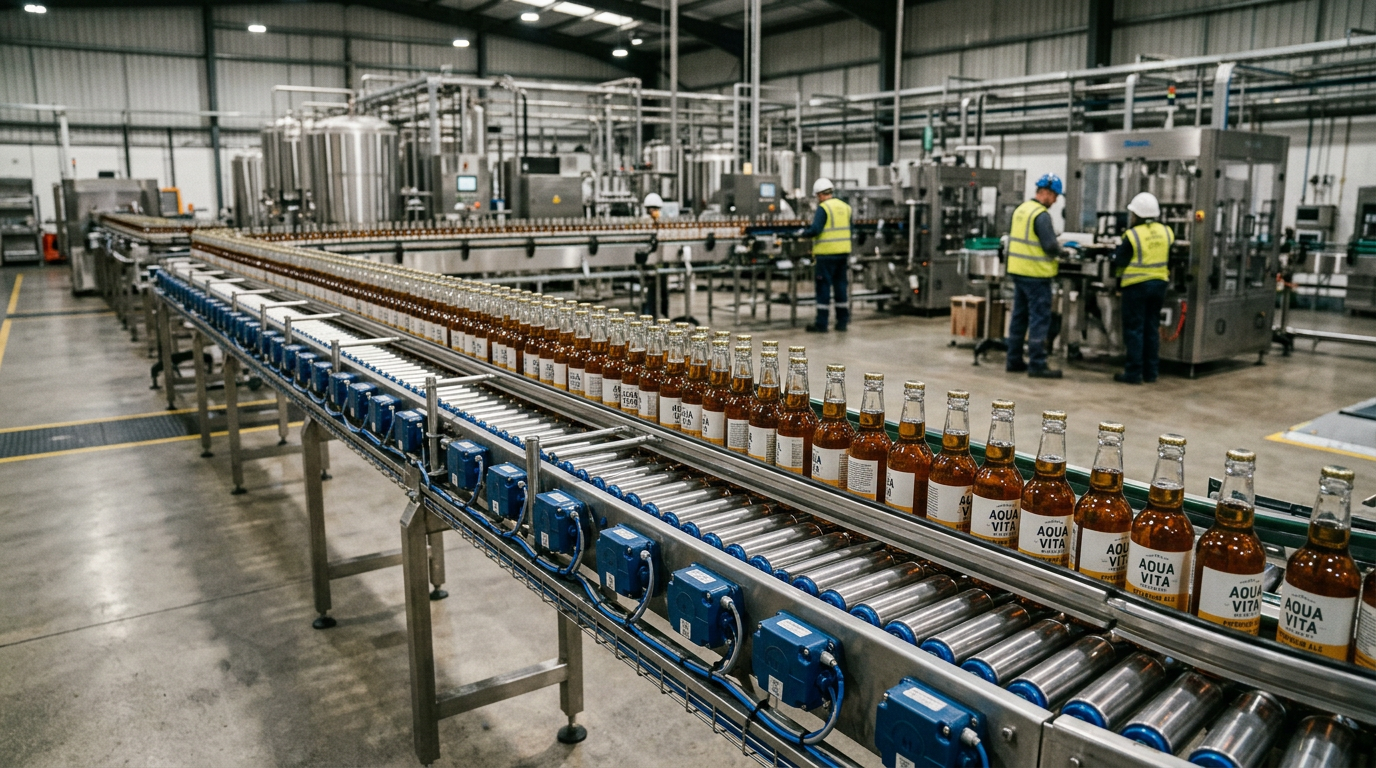
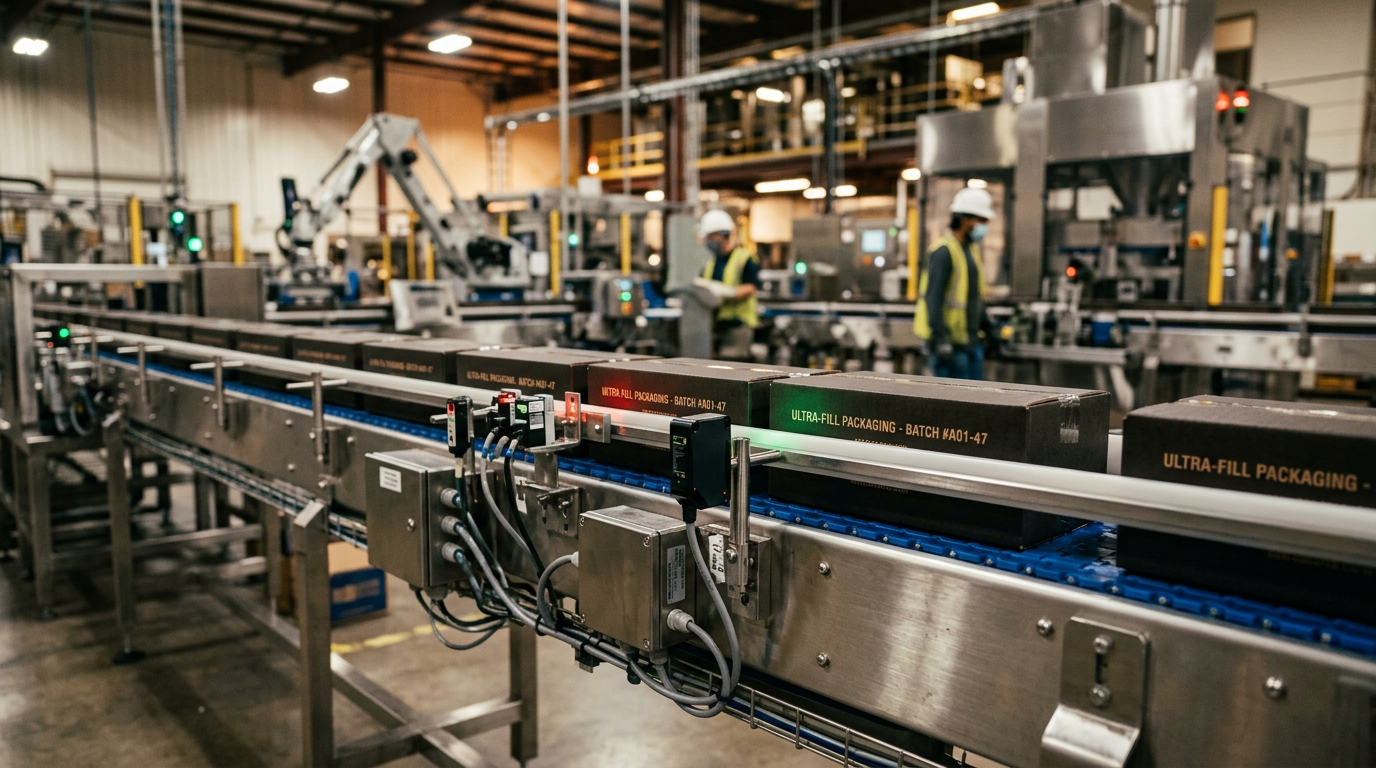
ZPA is the gold standard for fragile or high-value goods. In a ZPA system, the conveyor is divided into discrete zones, usually powered by 24V DC drum motors or motorized rollers. Photo-eye sensors detect the presence of a product in each zone. If the zone ahead is occupied, the current zone stops before the two products touch.
- Best for: Glass bottles, electronics, lightweight pharmaceutical boxes.
- Key Advantage: Eliminates "line pressure," preventing crushed cartons or scuffed labels.
Low-Pressure Accumulation (LPA)
LPA systems allow products to touch and exert slight pressure on one another. This is often achieved using plastic modular belts with integrated rollers or specialized "slippery" surfaces. As the line backs up, the belt continues to slide under the product.
- Best for: Robust packaging like canned goods, plastic crates, or heavy shrink-wrapped bundles.
- Key Advantage: Significantly lower cost and mechanical complexity compared to ZPA.
Comparison Table: Accumulation Technologies
| Feature | Zero-Pressure (ZPA) | Low-Pressure (LPA) | Spiral/Vertical Buffer |
|---|---|---|---|
| Product Contact | None (Gap maintained) | Continuous Surface | High Density |
| Control Complexity | High (Logic/Sensors) | Low (Mechanical) | Medium (Elevator Logic) |
| Footprint Efficiency | Standard | Standard | Excellent (Vertical) |
| Typical Logic | 24V DC / PLC Link | Friction-based | First-In, First-Out (FIFO) |
| Maintenance | Sensor alignment | Belt wear monitoring | Drive chain lubrication |
Advanced Buffer Strategies: FIFO vs. LIFO
When designing a buffer, the sequence of the product is often as important as the quantity.
- FIFO (First-In, First-Out): Crucial for temperature-sensitive food or products with strict lot-code sequencing. Serpentines and helical spirals are common FIFO buffers.
- LIFO (Last-In, First-Out): Often used in "dead-end" accumulation tables where products are pushed onto a side table and then pulled back when the line clears. This is simpler to build but can result in the first items produced being the last ones to ship.
For European manufacturers seeking high-performance modular solutions, Easy Conveyors provides a range of modular belt and chain systems specifically engineered for these high-cycle accumulation environments, balancing the need for structural rigidity with the flexibility of modular components.
Easy Conveyors stocks the material handling discussed here — ready to ship across Europe.
Technical Sizing: The 3-Minute Rule
A common engineering mistake is undersizing the buffer. If your downstream machine takes 5 minutes to clear a common jam, but your conveyor only holds 2 minutes of production, your upstream filler will still experience 3 minutes of forced downtime.
To calculate the required buffer length ($L$): $$L = (R \times T \times S) / D$$ Where:
- $R$ = Production Rate (units per minute)
- $T$ = Target Buffer Time (minutes)
- $S$ = Safety Factor (typically 1.1)
- $D$ = Density of products (units per linear meter)
Integrating components like VFD soft-start tuning is essential when these buffers restart. Abrupt torque spikes on a fully loaded accumulation line can snap chains or cause product topple-over, particularly in top-heavy packaging like wine bottles or tall canisters.
Integration with Industrial Automation
Modern buffer management is increasingly handled by decentralized intelligence. Instead of sending every sensor signal back to a central PLC, localized zone controllers manage the "stop-start" logic of ZPA conveyors. This follows the IEC 61131-3 standard for programmable controllers, allowing for modular code that can be scaled as the factory grows.
Furthermore, the rise of "smart buffers" using IO-Link sensors allows maintenance teams to monitor the friction levels on accumulation belts. If the belt requires more torque than usual to slide under an accumulated load, the system can flag a predictive maintenance alert before a motor failure occurs. This is a critical component of hygienic wash-down design in food packaging, where debris buildup on the belt can drastically alter friction coefficients and accumulation performance.
Failure Modes and Preventive Maintenance
Accumulation systems are among the most mechanically stressed parts of a conveyor line due to frequent cycling.
- Zone Controller Fatigue: In ZPA, the constant starting and stopping can wear out internal relays. Using solid-state switching or brushless DC motors extends life.
- Sensor Misalignment: In dusty environments (e.g., flour packaging or corrugated box dust), photo-eye sensors can become blinded. Regular cleaning and the use of high-gain sensors are required.
- Belt "Scrubbing": In LPA systems, the belt is designed to slip. However, if the product is too heavy, the friction generates heat, which can glaze the belt surface, reducing its effectiveness and eventually melting the plastic modular links.
By treating the accumulation conveyor not as a "dumb" piece of hardware but as a dynamic buffer management tool, operations managers can significantly improve their line's net output and reduce the stress on both machines and operators.
Frequently Asked Questions
What is the difference between ZPA and LPA?
Zero-Pressure Accumulation (ZPA) uses sensors and zoned motors to ensure products never touch, preventing damage. Low-Pressure Accumulation (LPA) allows products to touch but uses low-friction belts to minimize back-pressure.
How much buffer time should a packaging line have?
A standard rule of thumb is to provide 3 to 5 minutes of buffer capacity. This allows operators to clear the most common minor machine faults without stopping the entire production line.
Why is FIFO important in buffer management?
FIFO (First-In, First-Out) ensures the oldest products leave the buffer first, which is critical for food and pharma with expiration dates. LIFO is simpler but results in unequal product dwell times.
What motor type is best for ZPA conveyors?
24V DC Motorized Drive Rollers (MDR) are ideal for accumulation because they allow for independent zone control, high energy efficiency, and simple integration with sensors for zero-pressure logic.
How do I maintain an accumulation system?
Regularly clean sensor lenses, check for belt glazing (melting) on low-pressure systems, and verify that zone controllers are properly communicating with the downstream "handshake" signal.